
Demolition, Site Prep, & Foundation
Every exceptional custom home begins long before the framing goes up; it starts with what happens below the surface. From safe demolition and asbestos testing to site preparation, excavation, groundwater management and advanced foundation systems, we take care of every detail so your new home rests on a solid, long-lasting base.
Asbestos
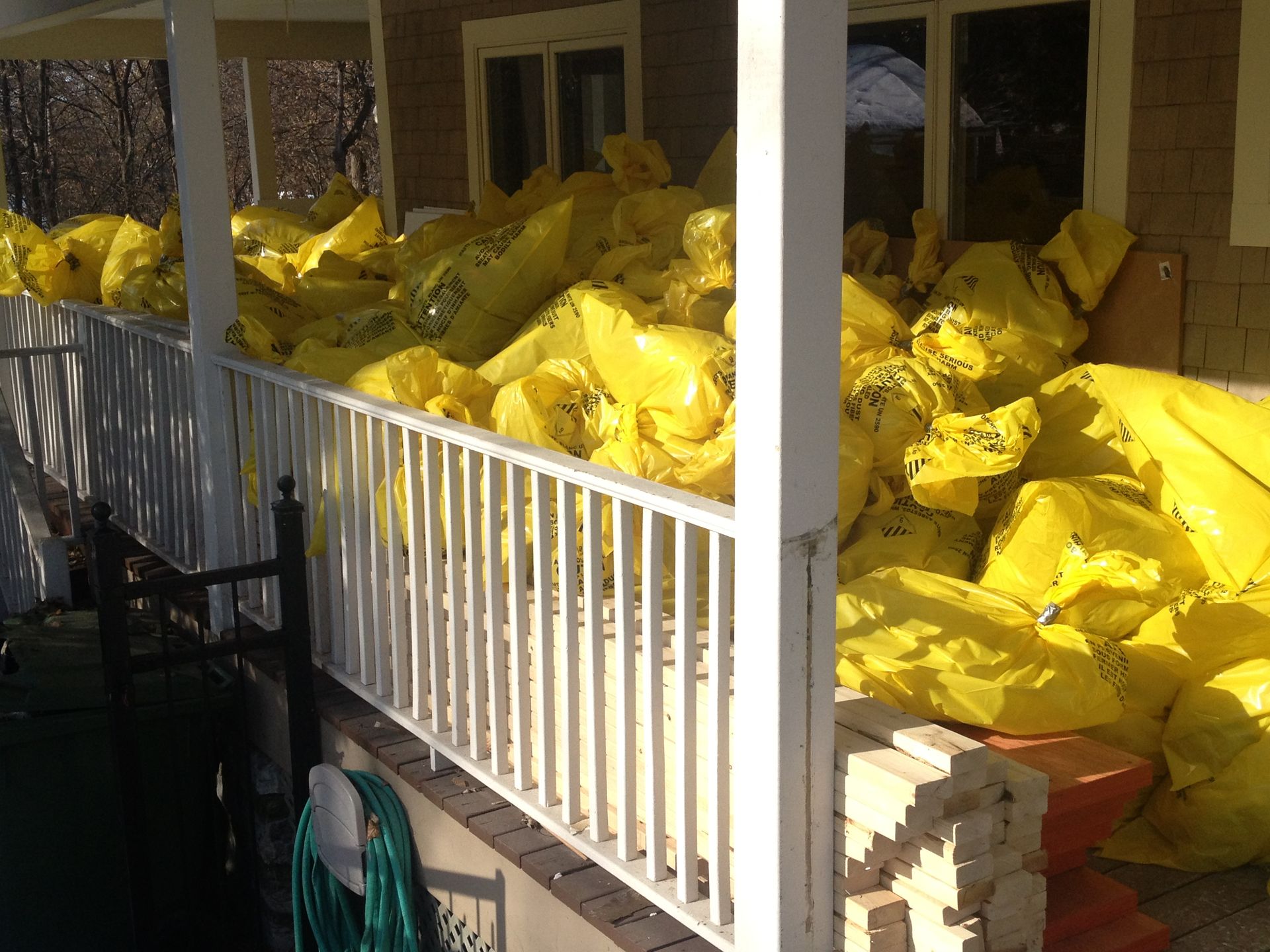
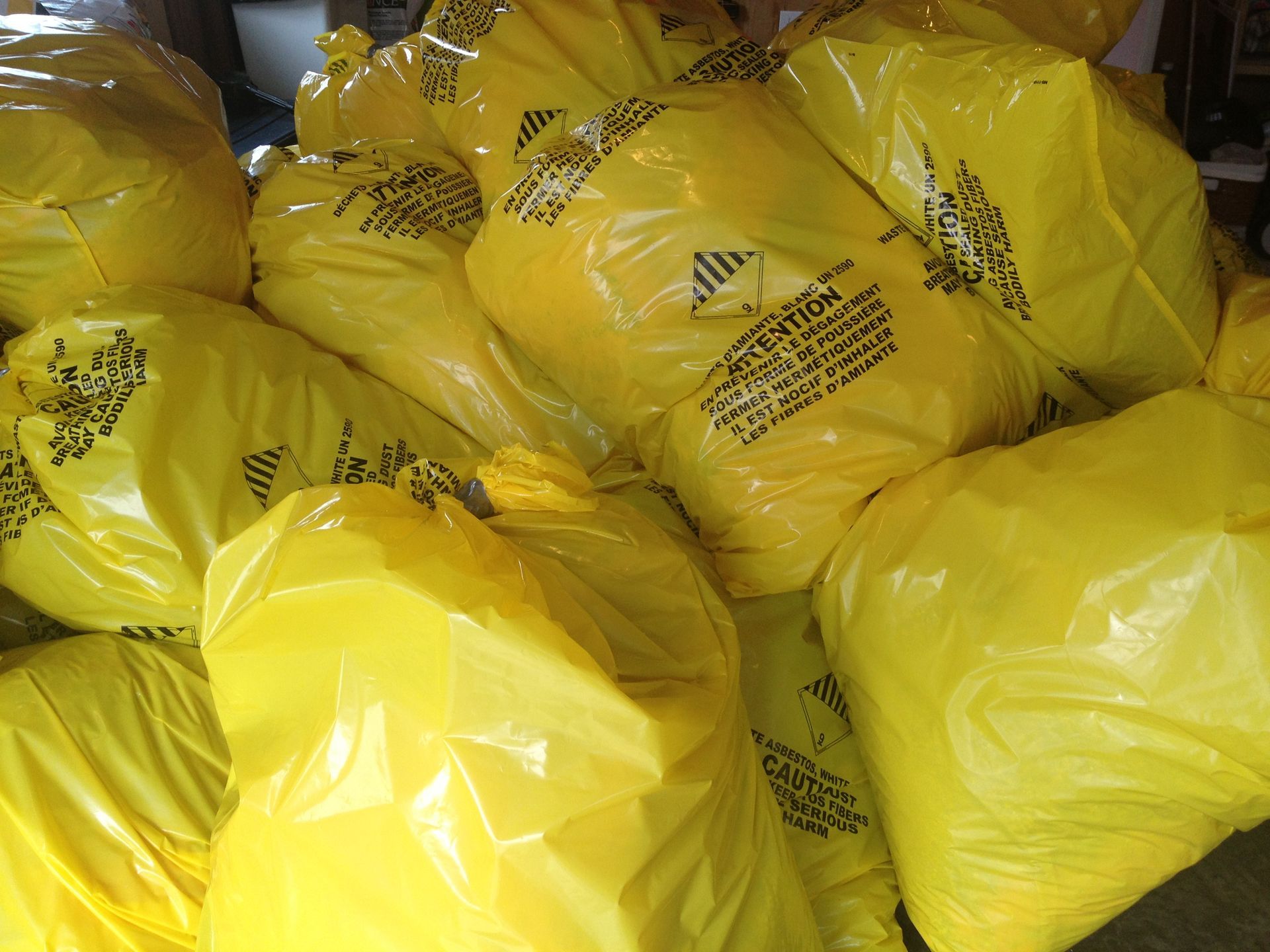
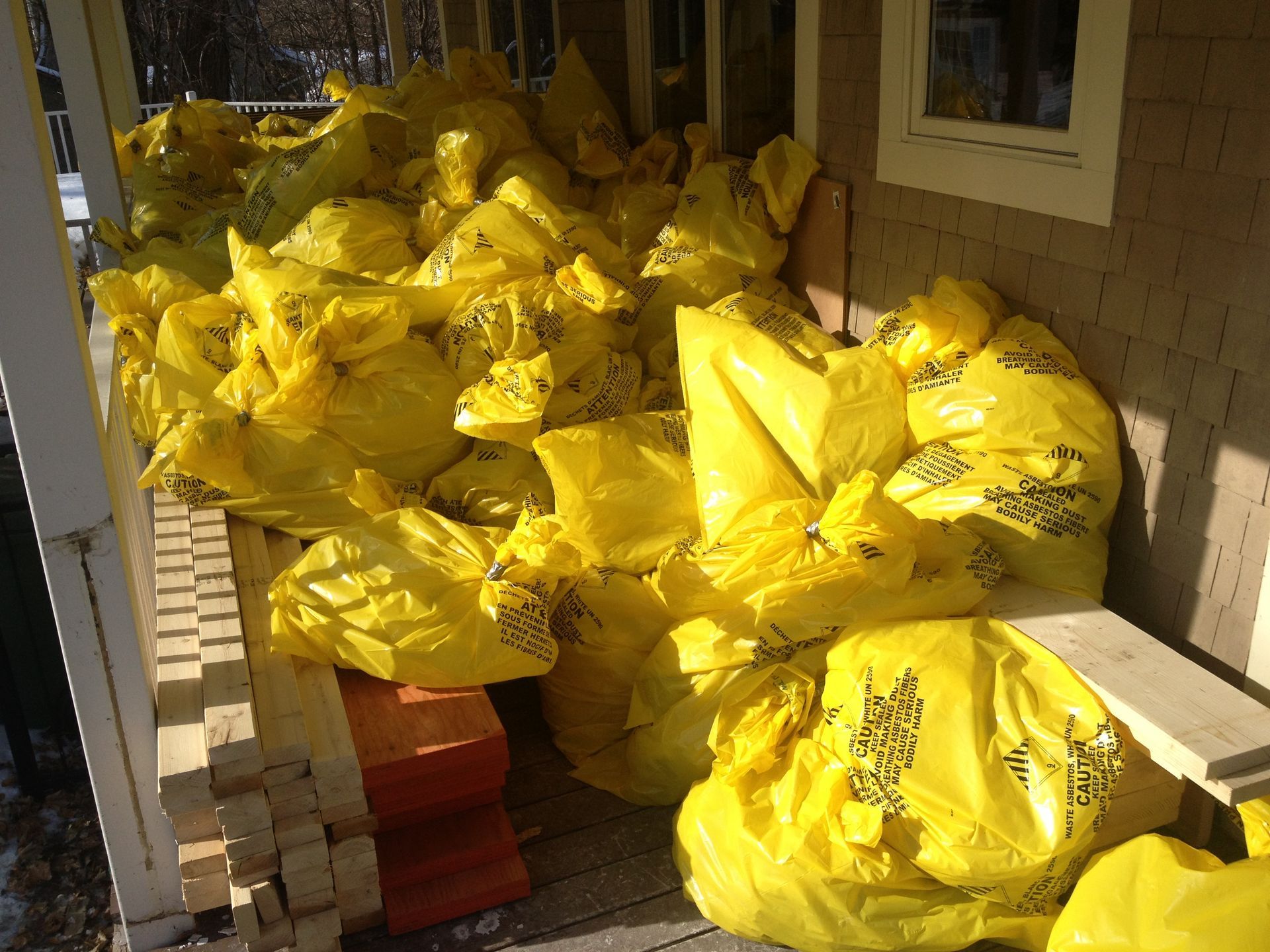
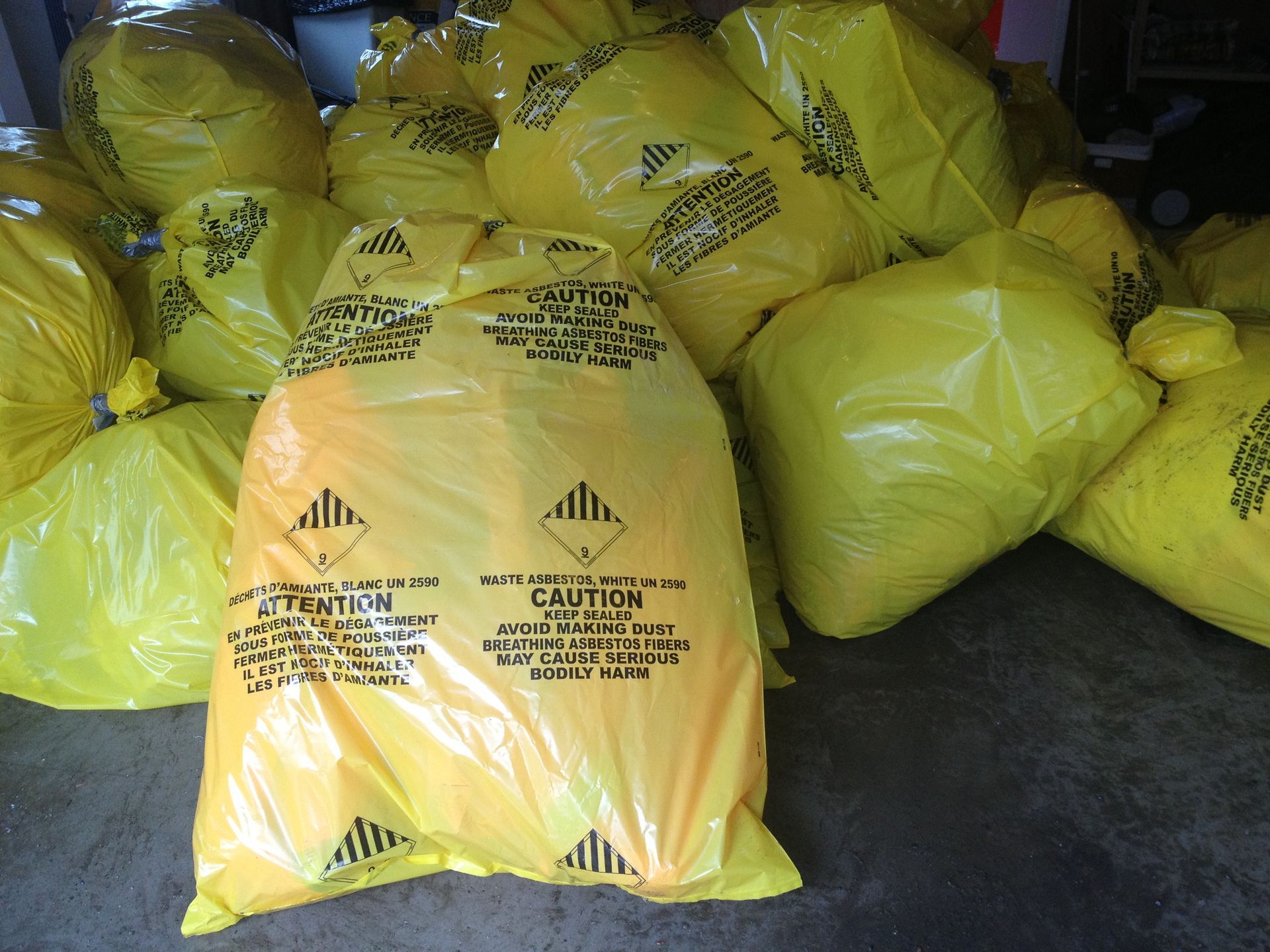
Many houses on the West Island still contain asbestos-bearing materials (insulations, siding, vinyl floorings and plaster compounds). Before a renovation or a demolition, provincial and municipal laws now require asbestos testing (and removal by specialized contractors if present) before the commencement of any construction work to protect both the workers and the homeowners alike.
Demolition
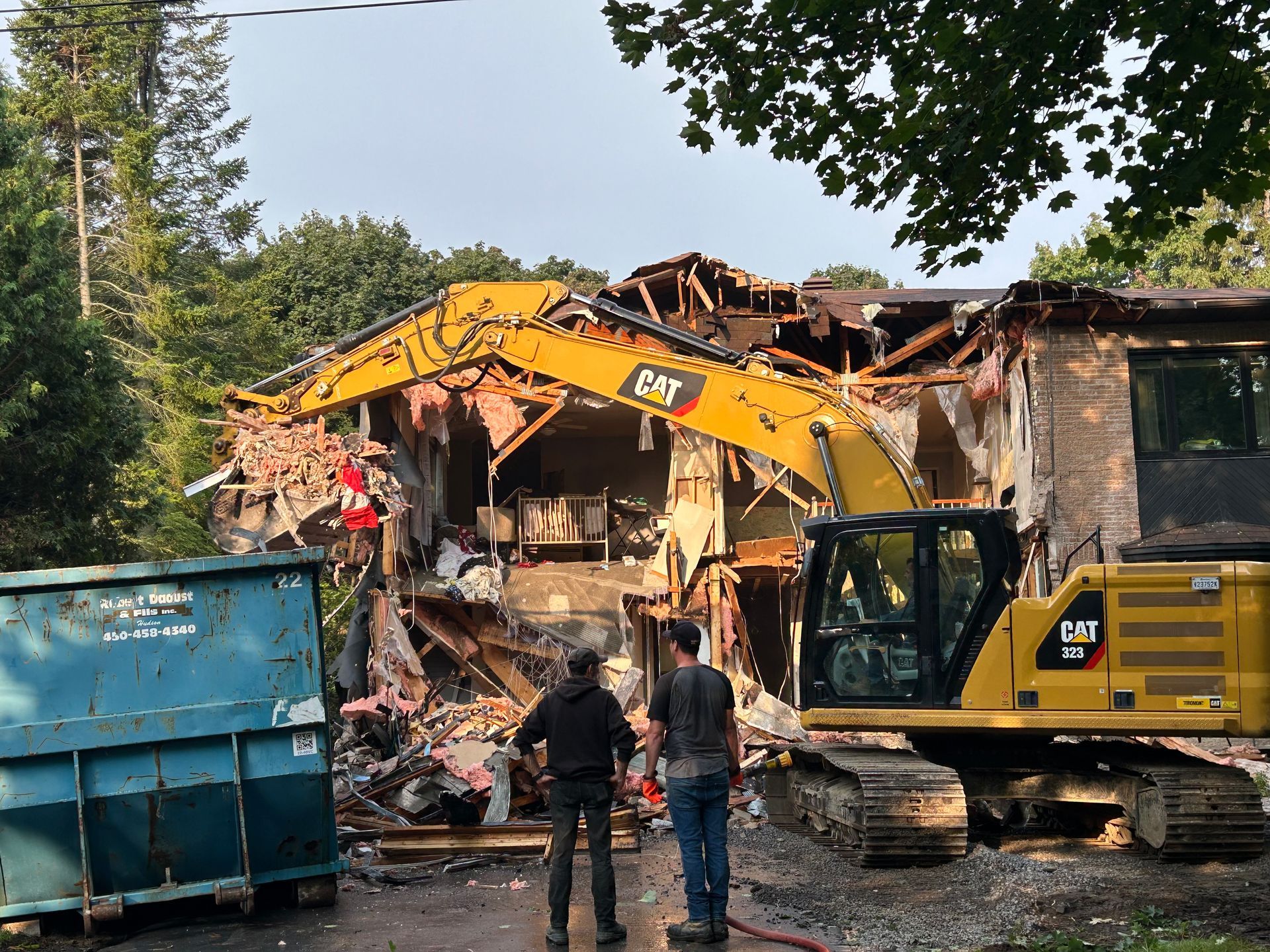
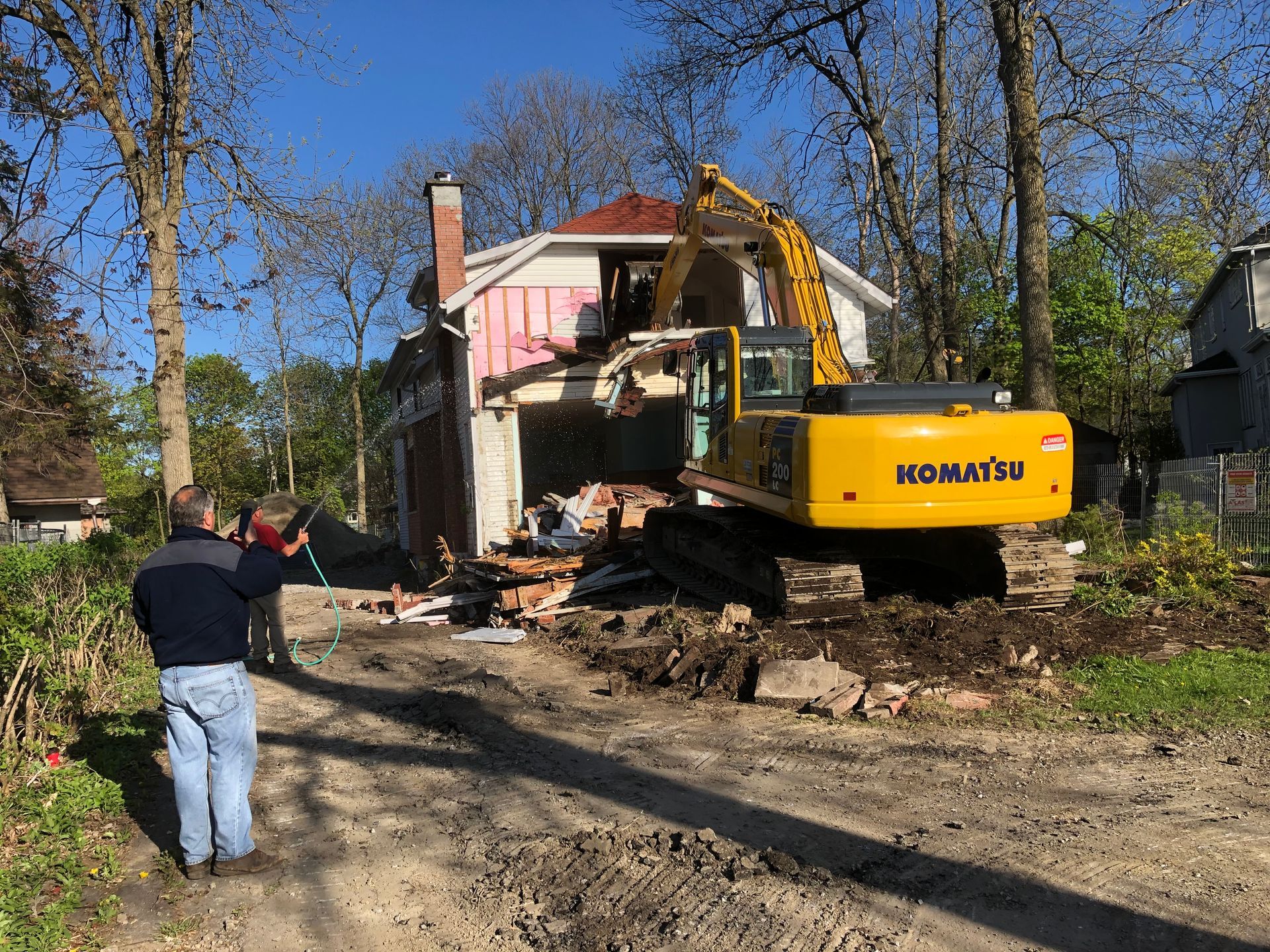
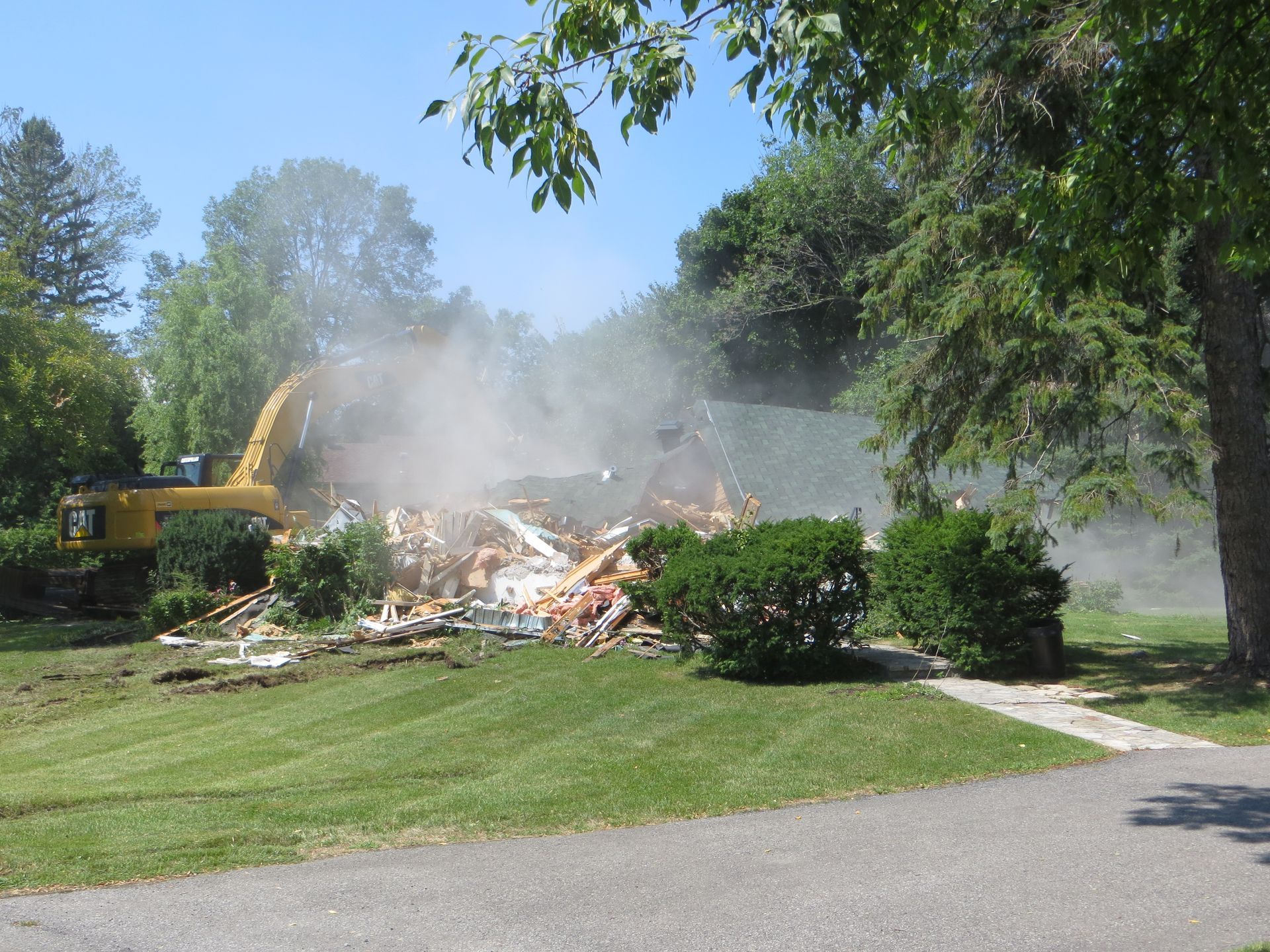
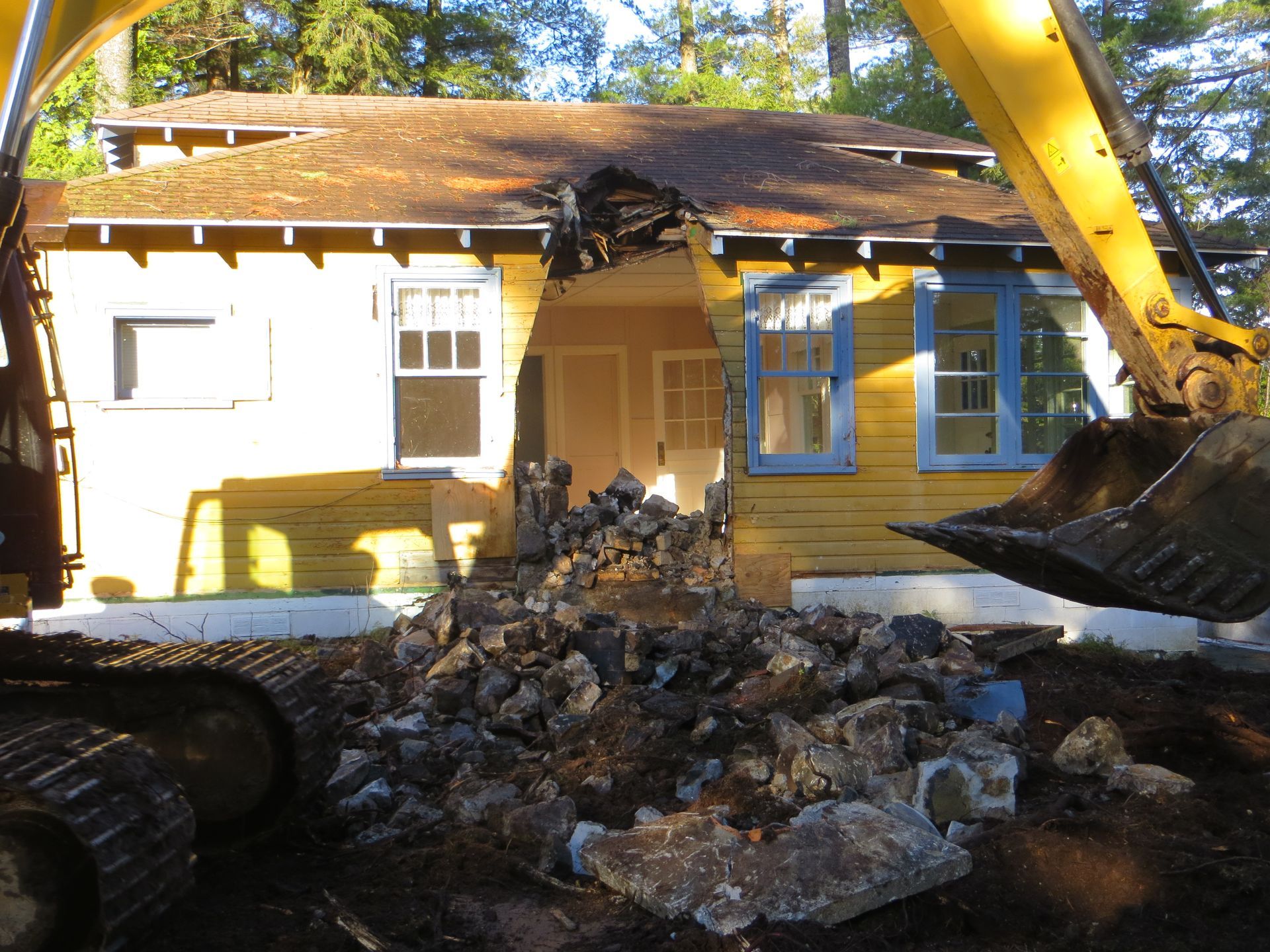
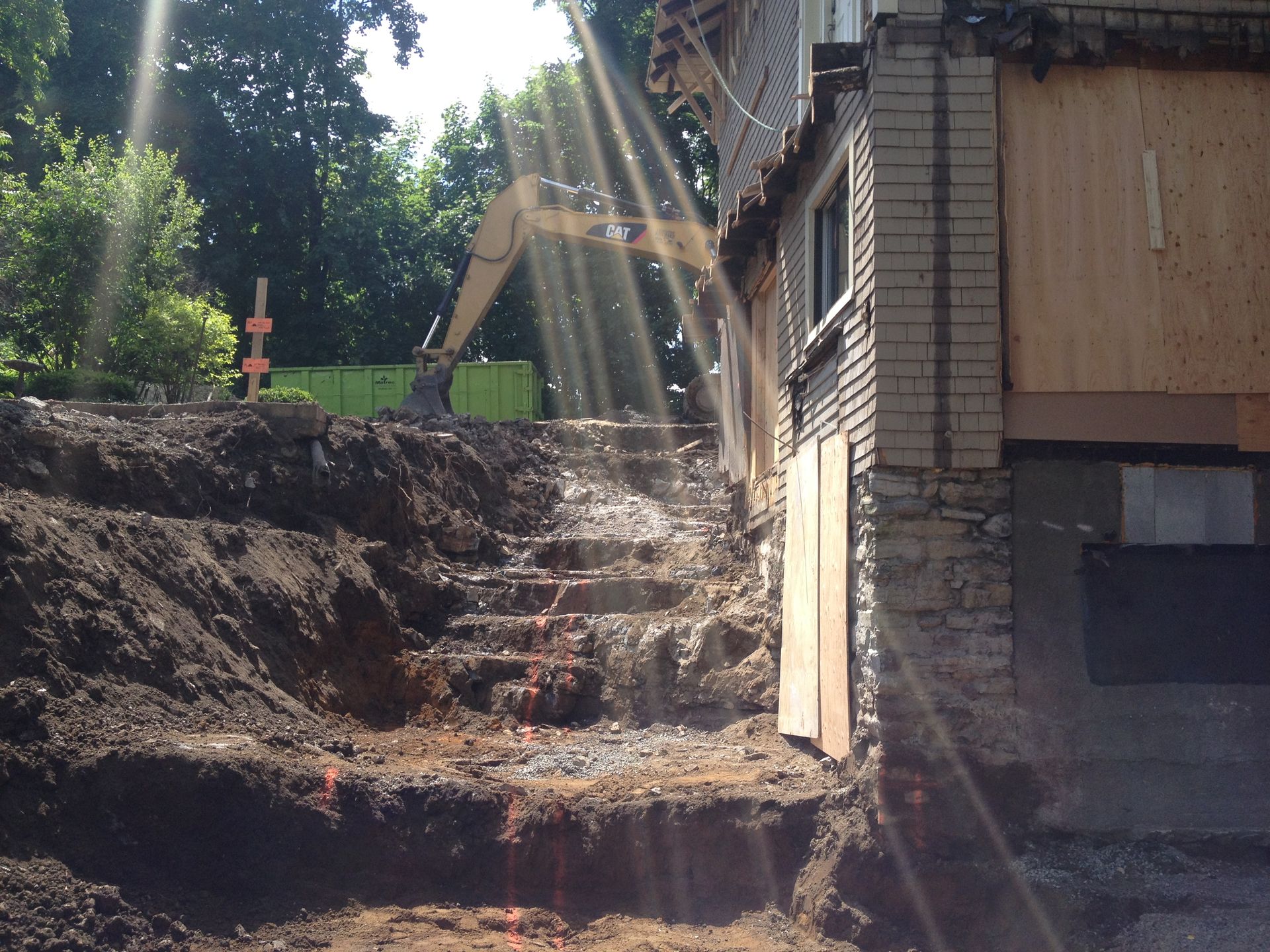
Empty land is scarce! Most of the new homes we build are found in established neighbourhoods which require the demolition of an existing house. Over the years, municipal control of all aspects of demolition has increased including pre-demolition asbestos inventories, tree inventories & tree protection, dust control and public safety measures.
Dynamiting
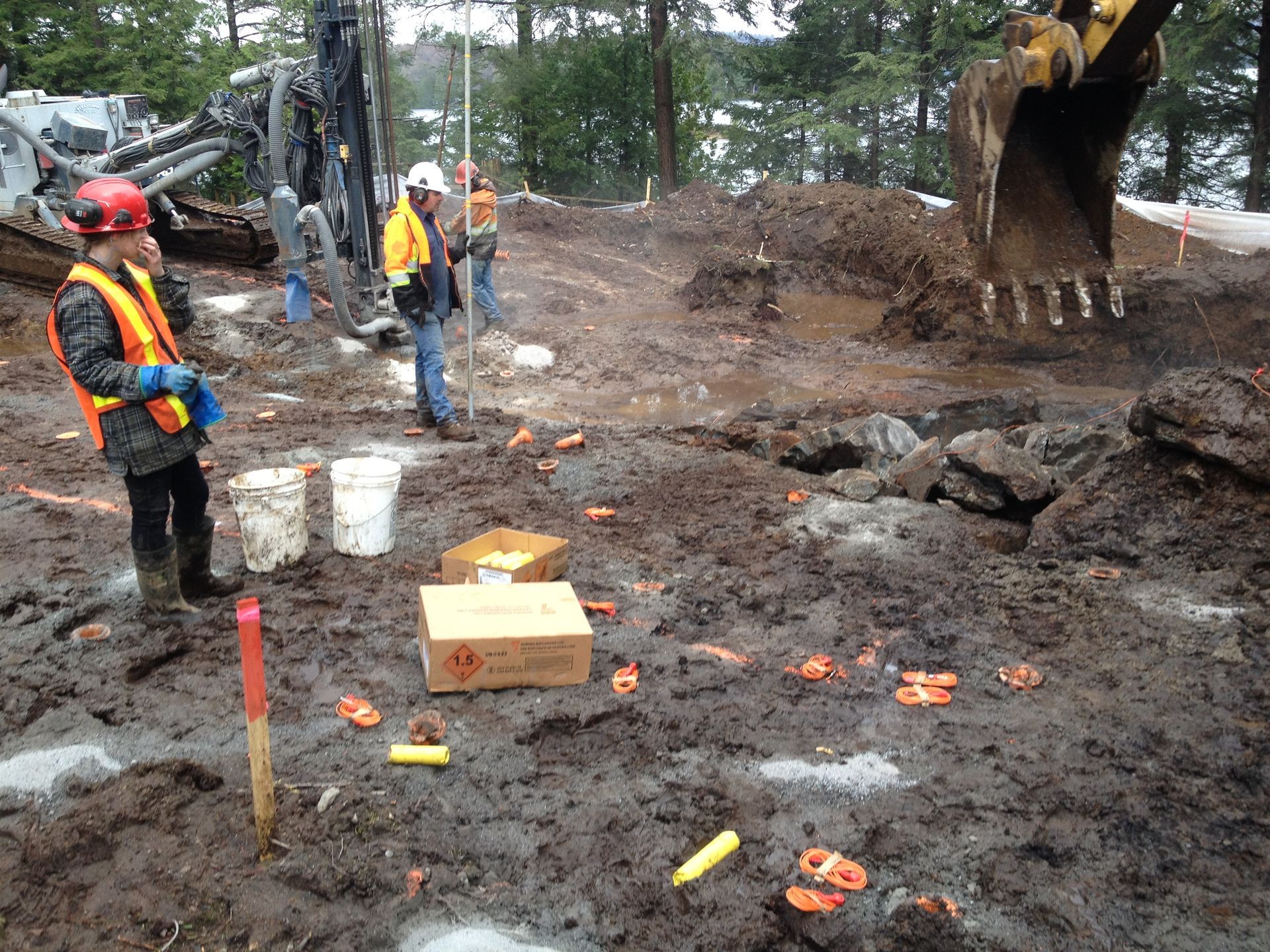
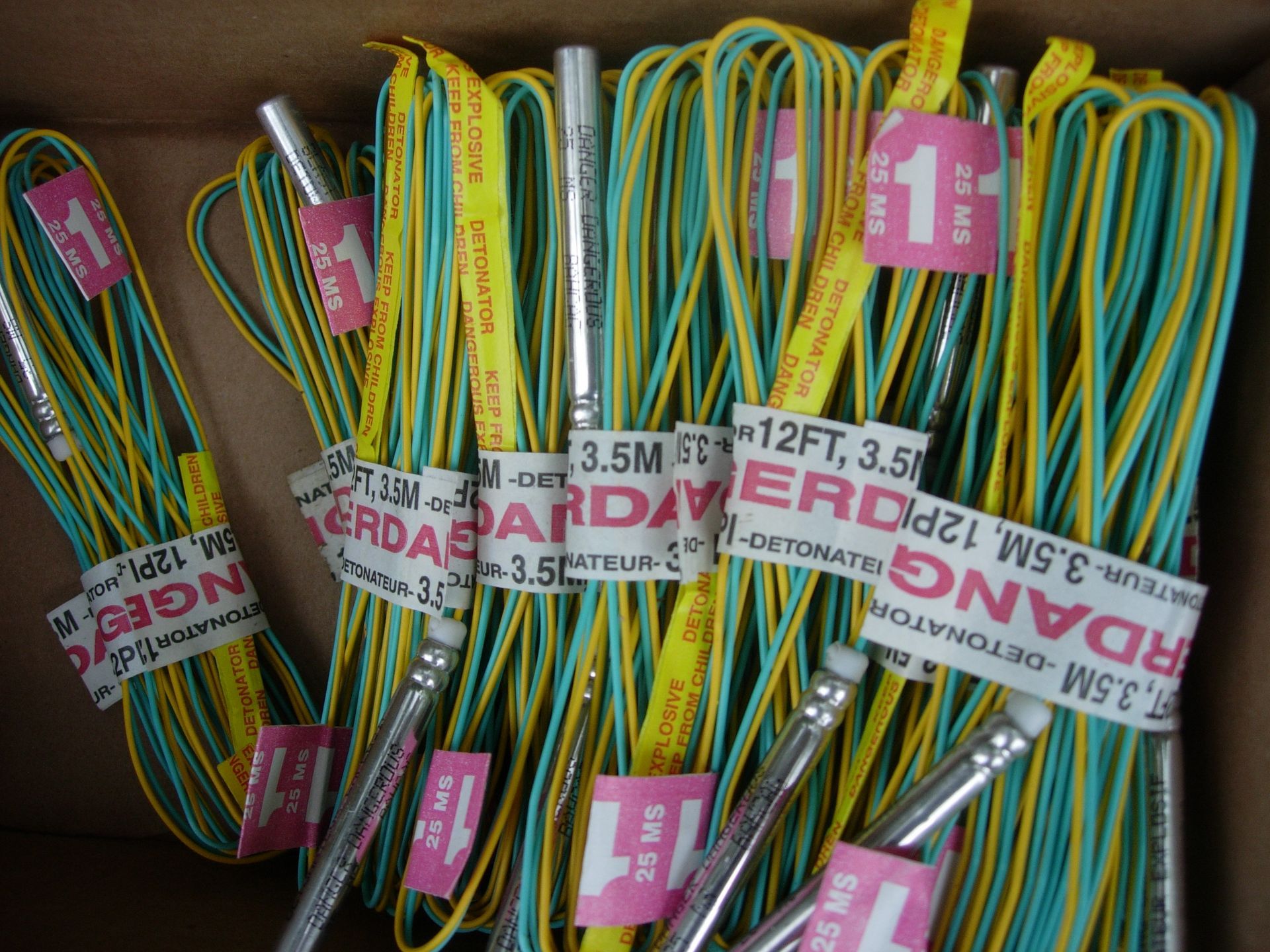
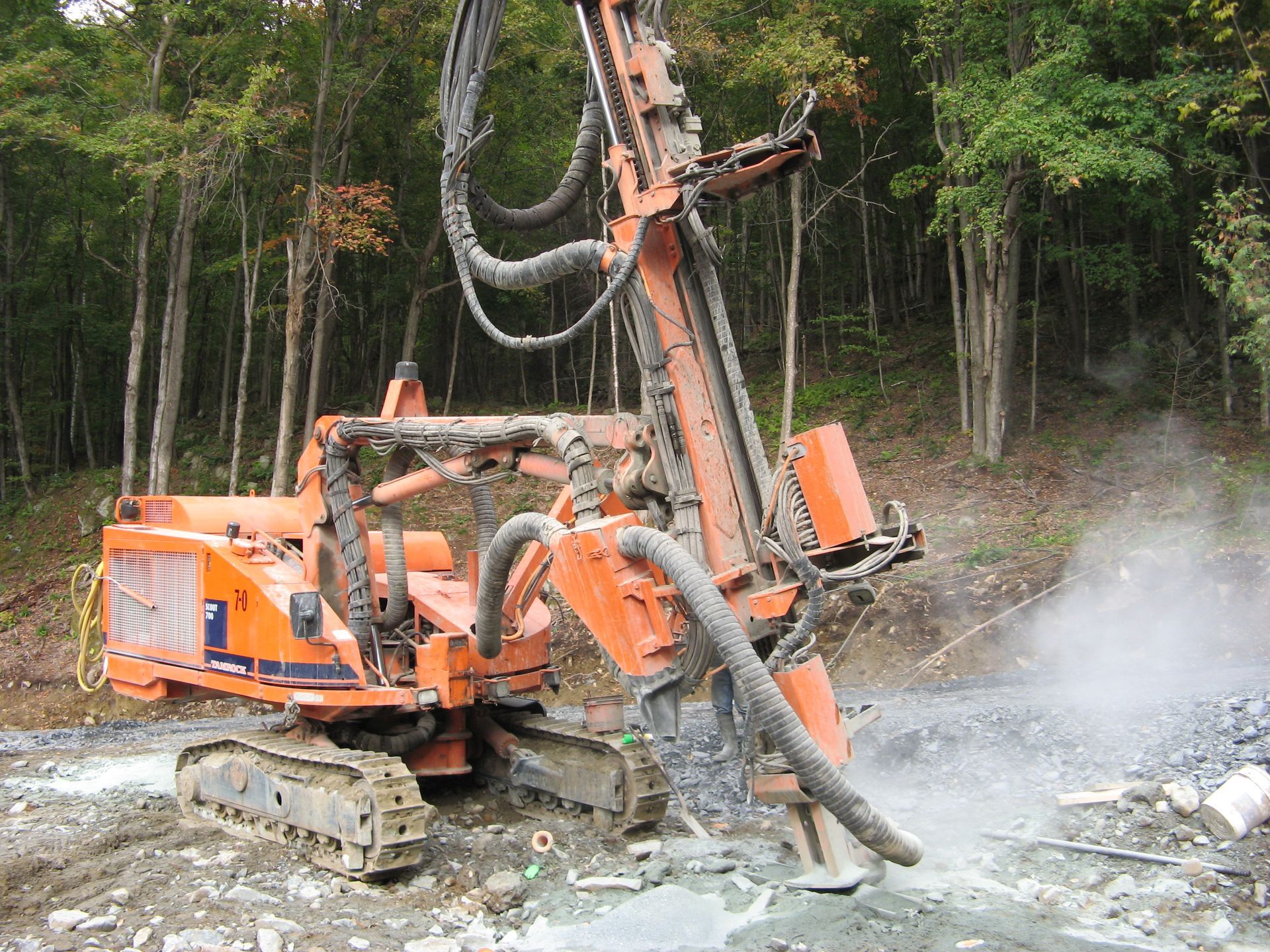
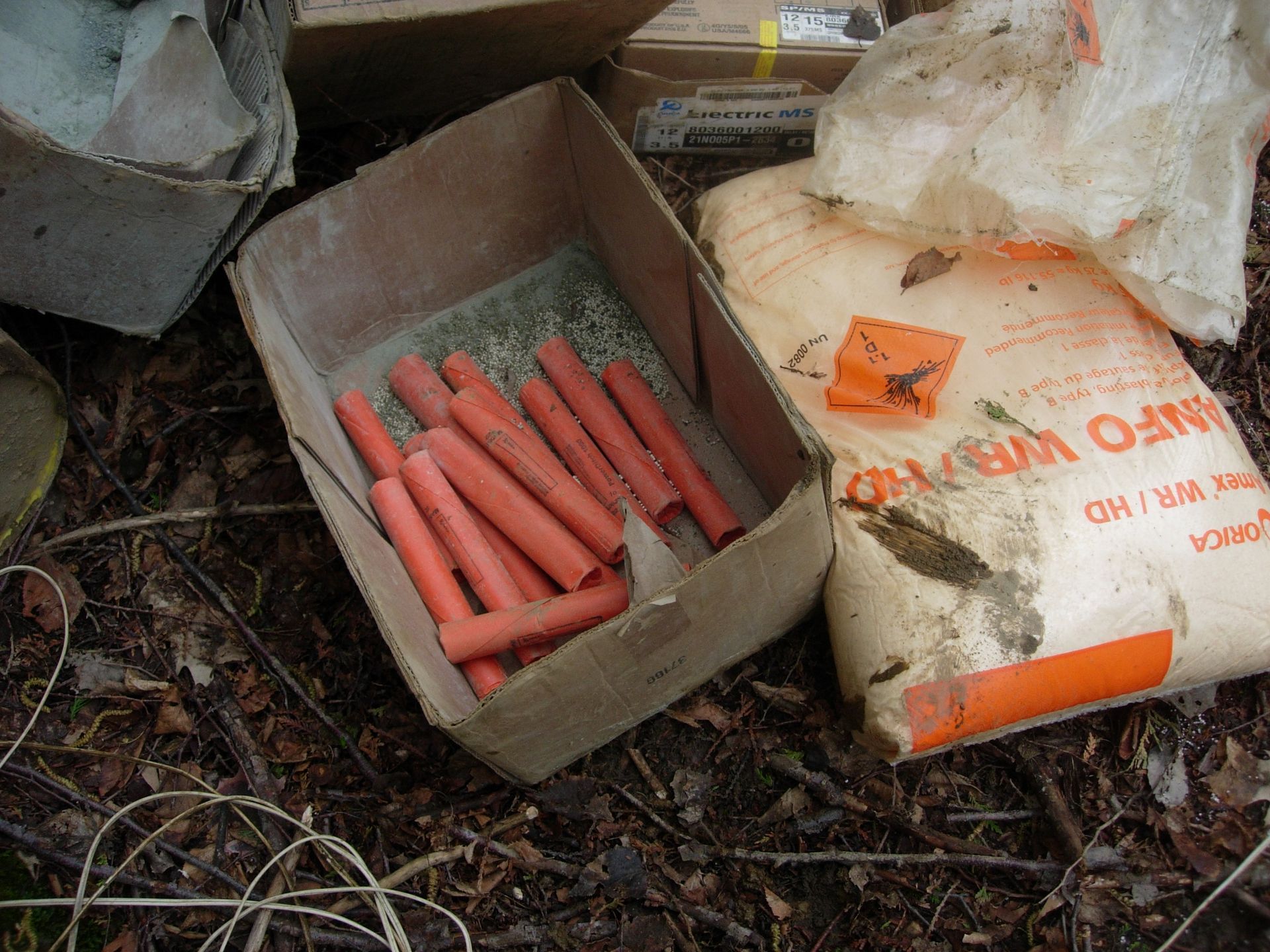
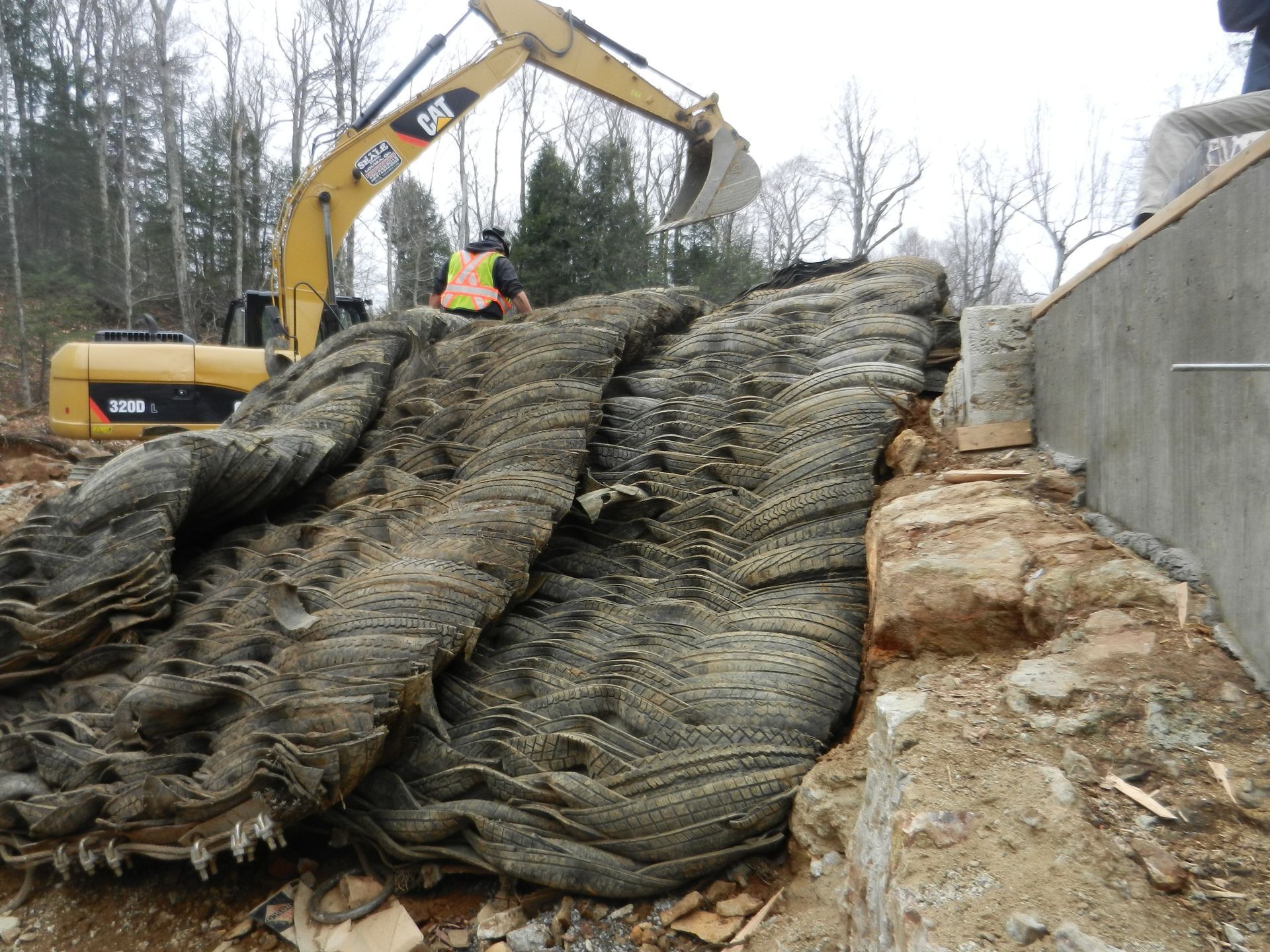
Dealing with bedrock in the off-island and in the country often requires dynamiting. Lots of planning and precautions required! If your building project is located in an off-island municipality which permits dynamiting, please consider our company for your project. We have done many projects which have required extensive site preparation involving the dynamited removal of bedrock.
Excavation
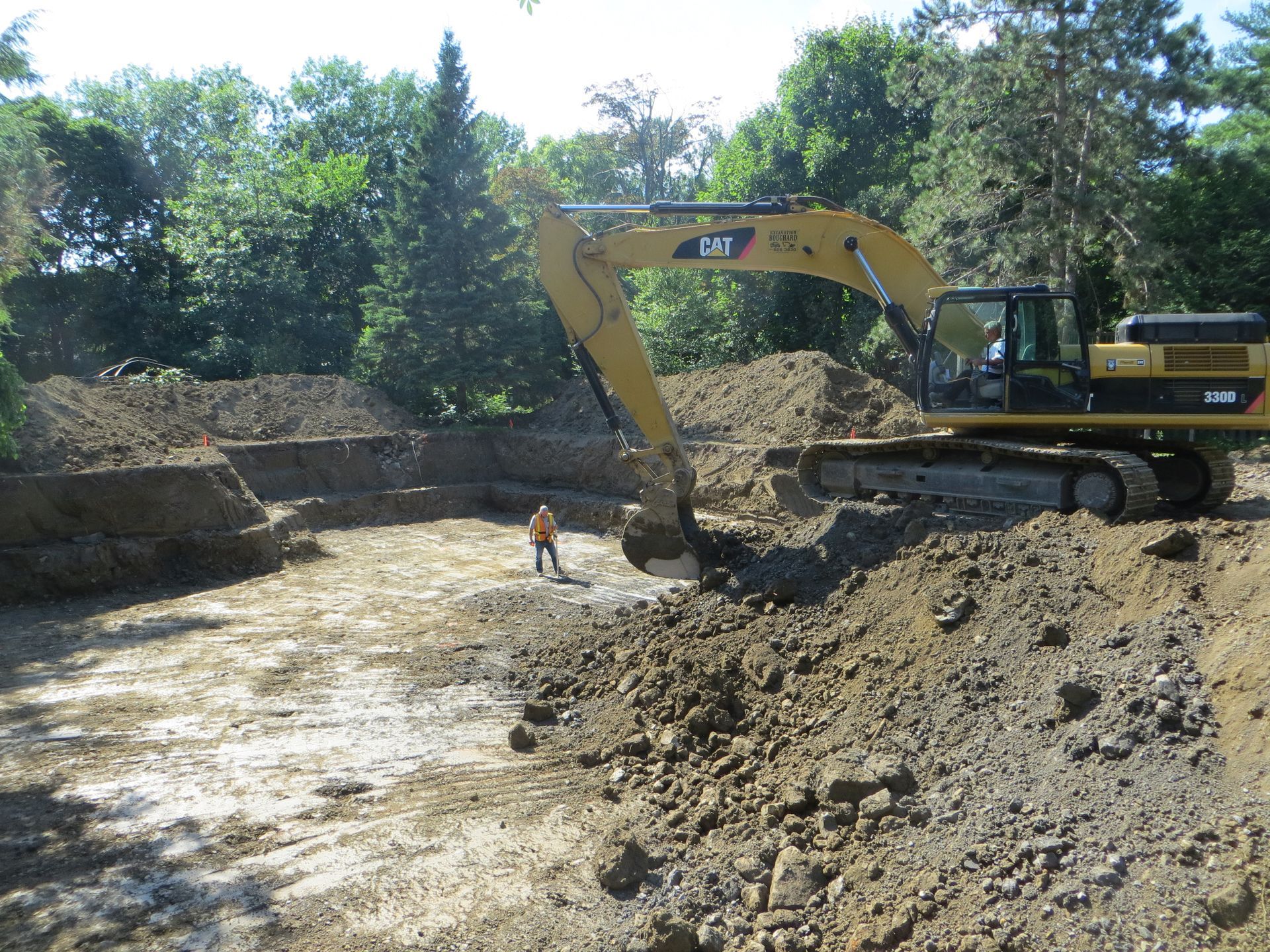
The process of excavation for your new home starts with the work of a surveyor to provide on-site benchmarks to precisely place the new foundation to the depth & height specified in the accepted building plans, as well as to accurately place the foundation on the lot to respect the protected margins specified by the municipal zoning regulations.
Ground Water Pumping
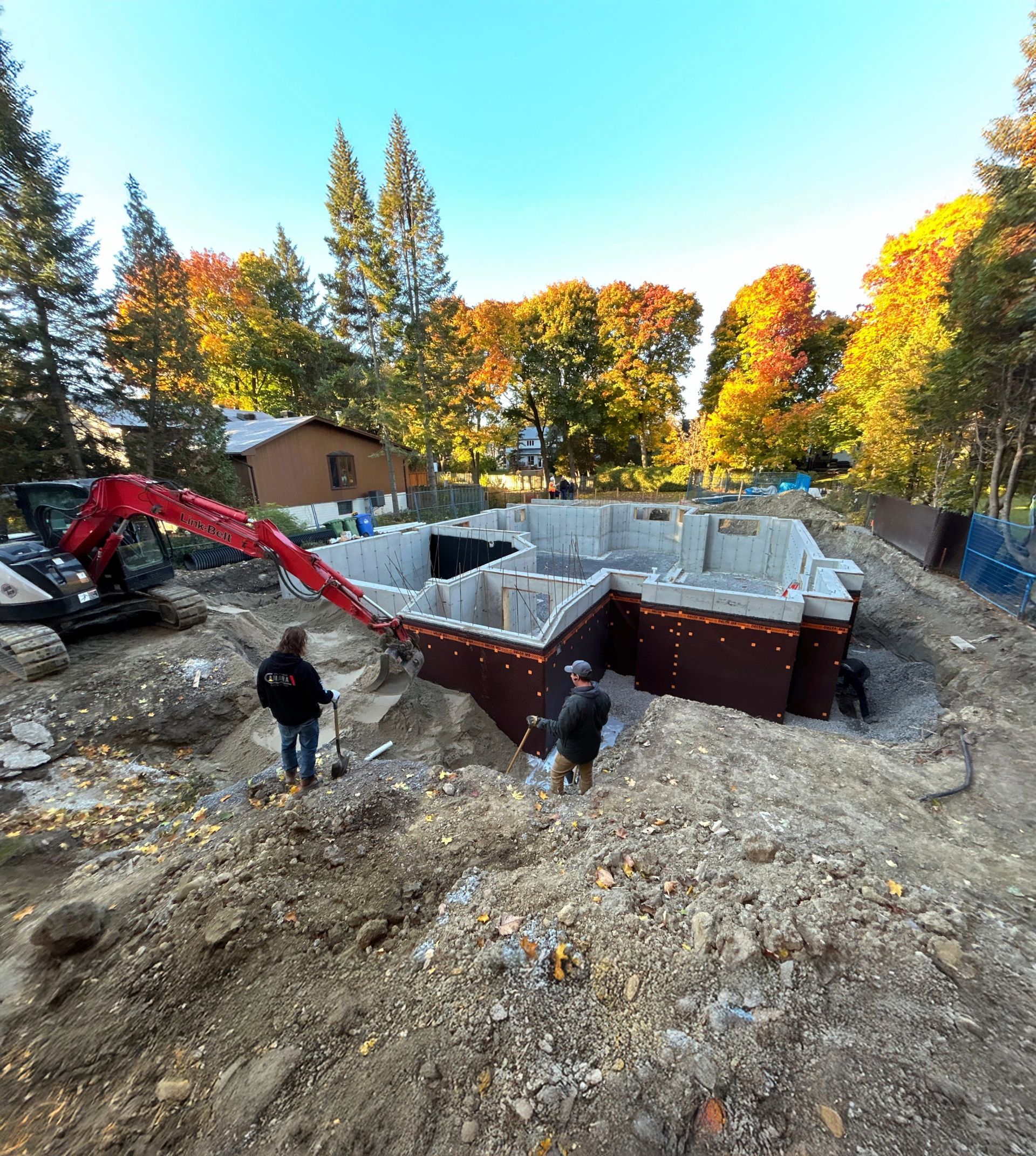
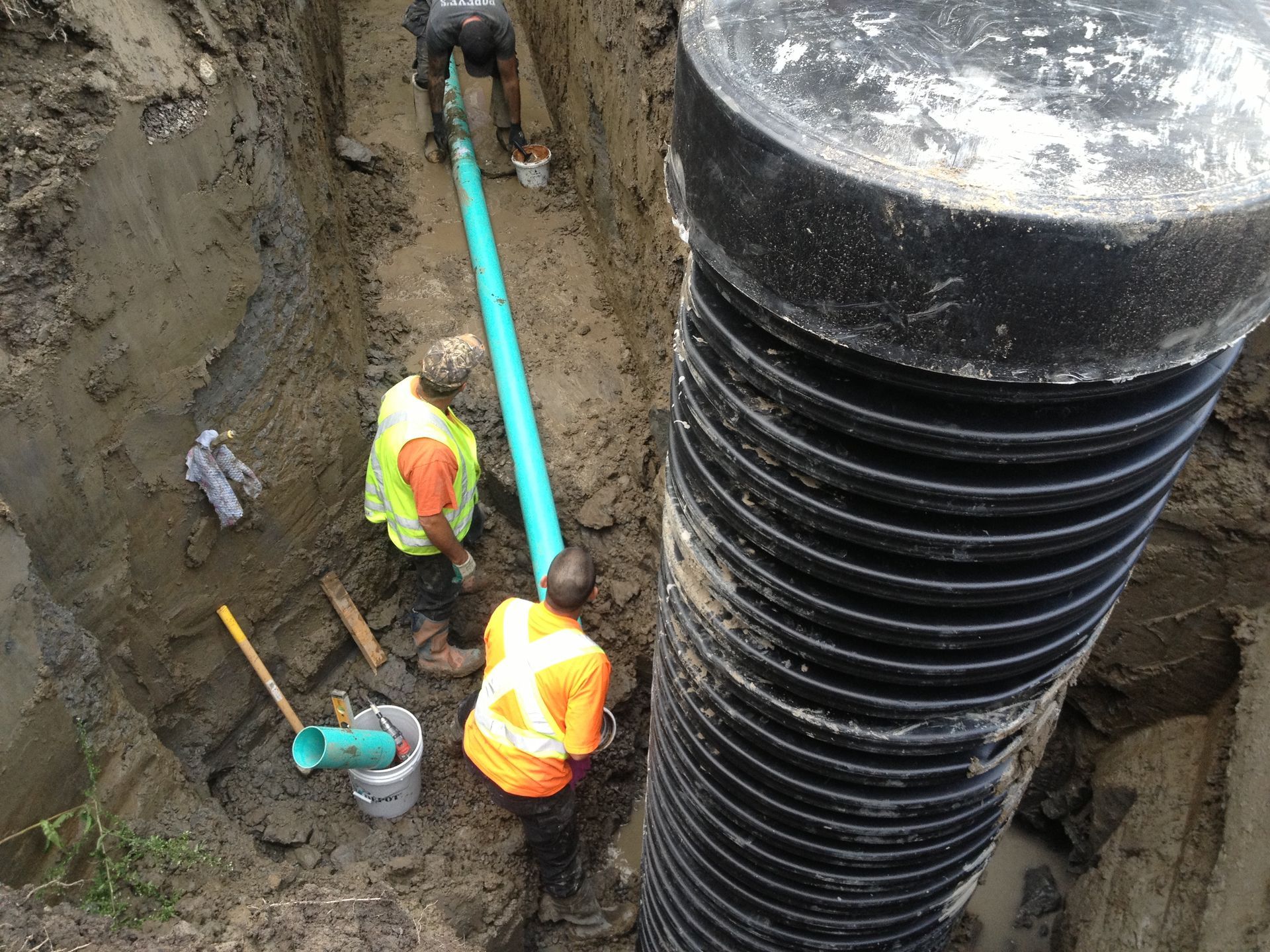
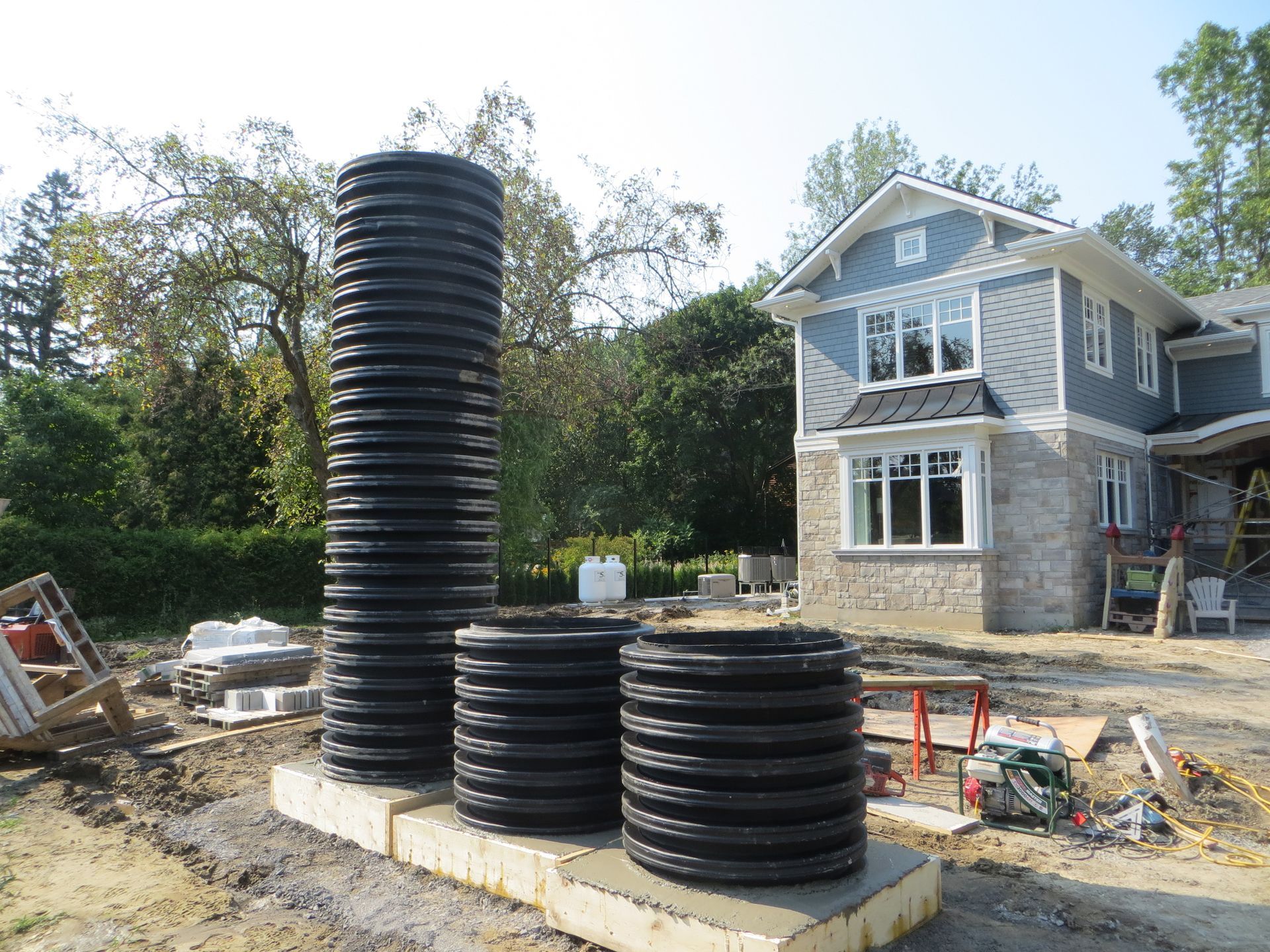
Many new homes today are bigger, and are placed deeper in the earth, than the previous generations of houses built in the Fifties, Sixties and Seventies… Due to their depth, and the fact that the West Island has many undulating layers of clay (generally leading water either towards Lac-St-Louis & Rivière des Prairies) most new house foundations will experience added hydrostatic pressures as rain and snow-melt seep into the earth.
While we excavate, we are careful to note the composition of the earth at different levels, and the types and the strata of clay within the excavation area.
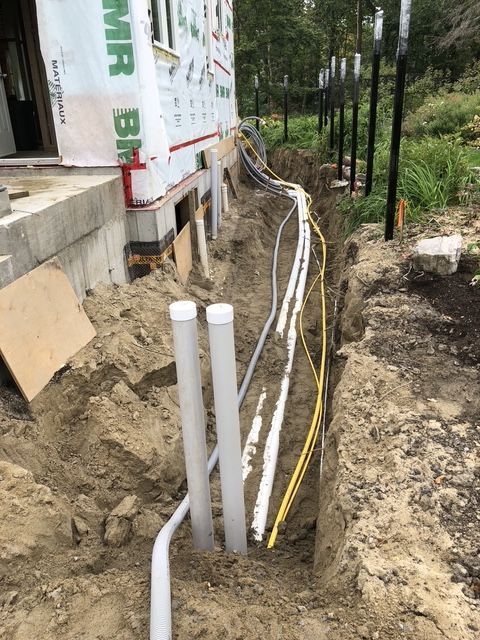
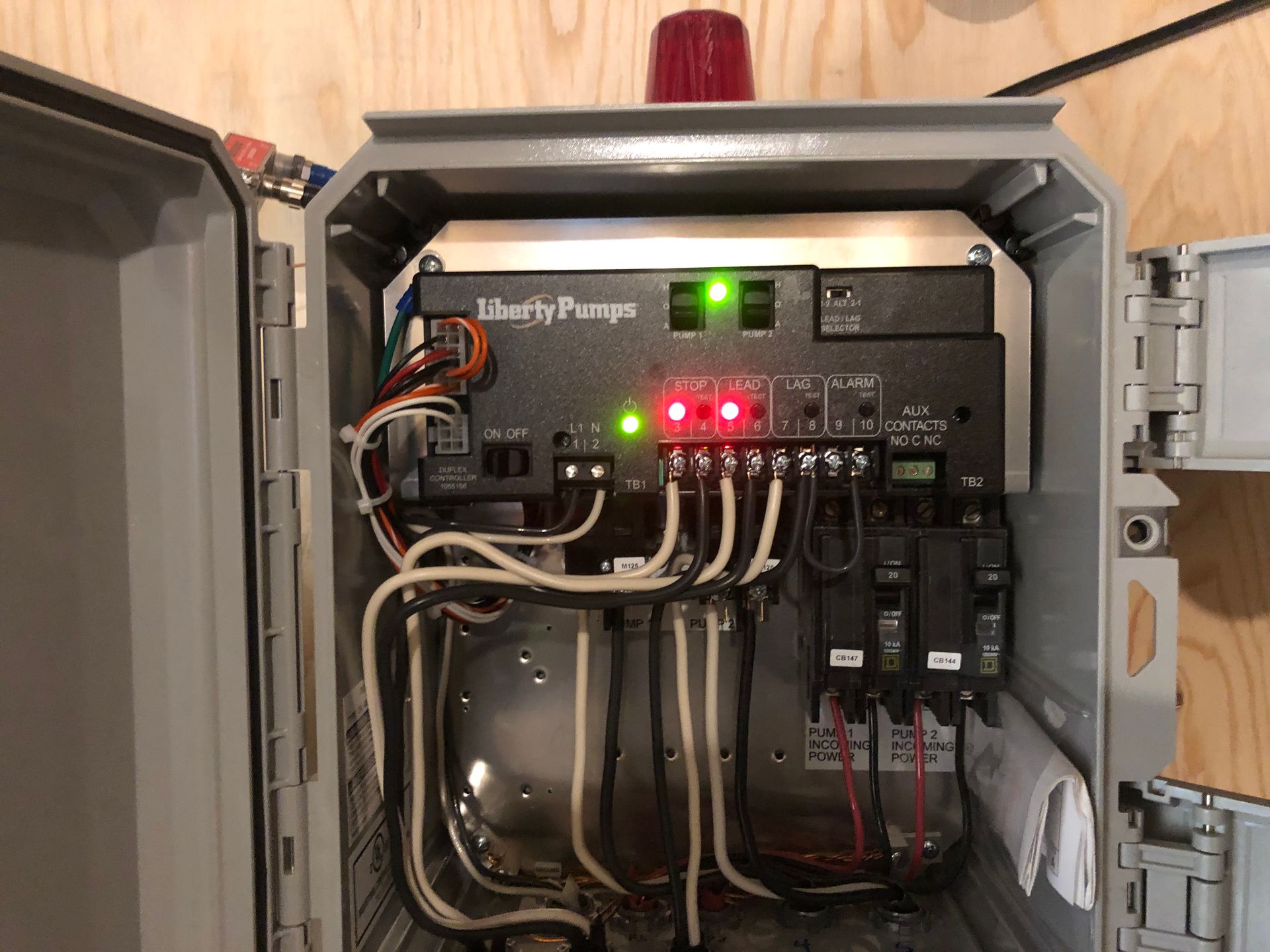
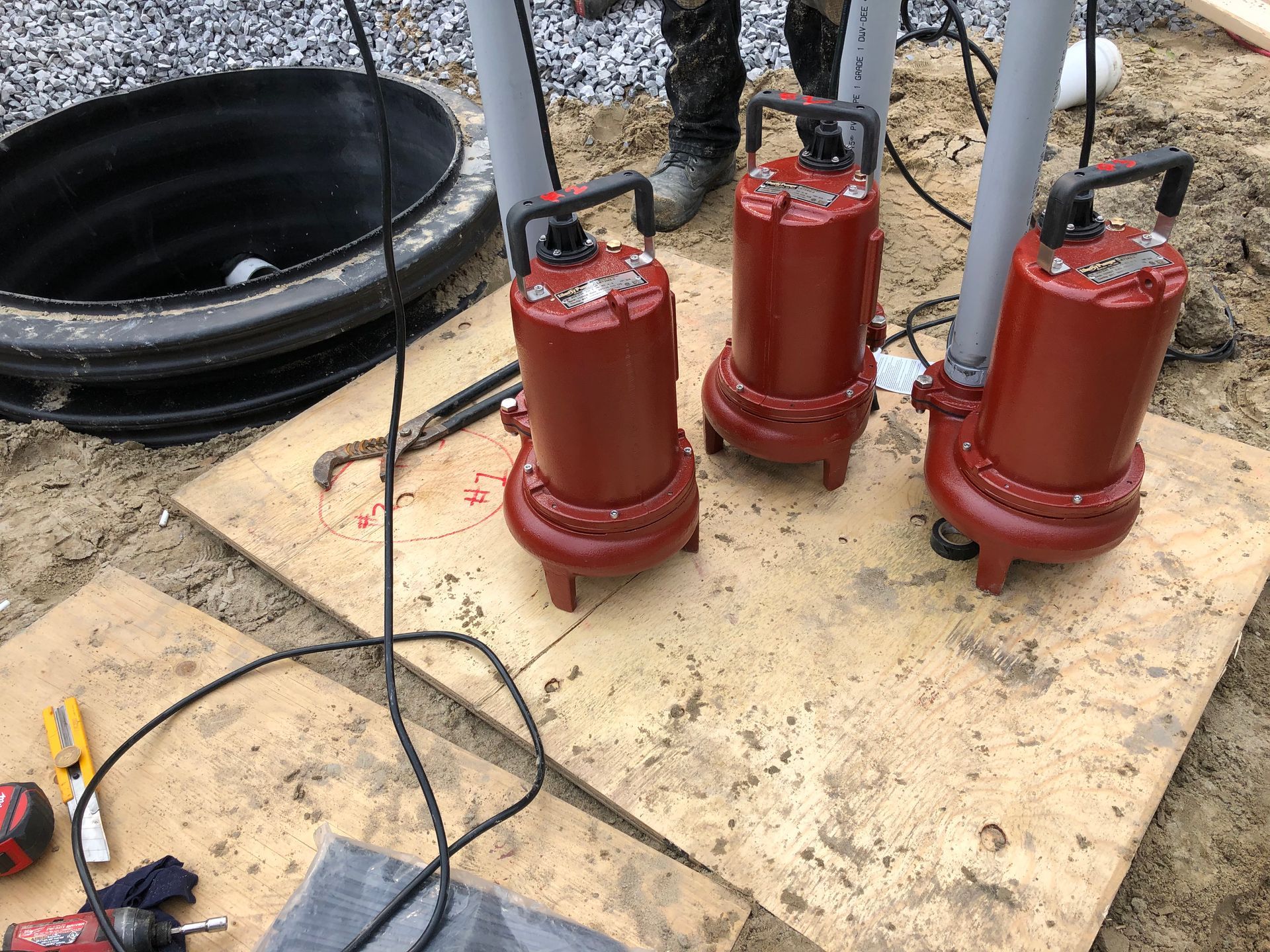
To prevent future basement problems, we normally specify high-capacity exterior pump-stations combined with upgraded perimeter water collection piping assemblies. Additional protection is achieved with generator & propane installations (in case of utility outages) to keep your new house dry.


Foundations
The depth of your new foundation is established by your architect, and confirmed by your municipality, during the permitting process. Often times, due to the proximity of your foundation to the protected municipal zonings of your building lot, a surveyor will be required to pay several visits to ensure correct foundation placement and the required finished elevation.
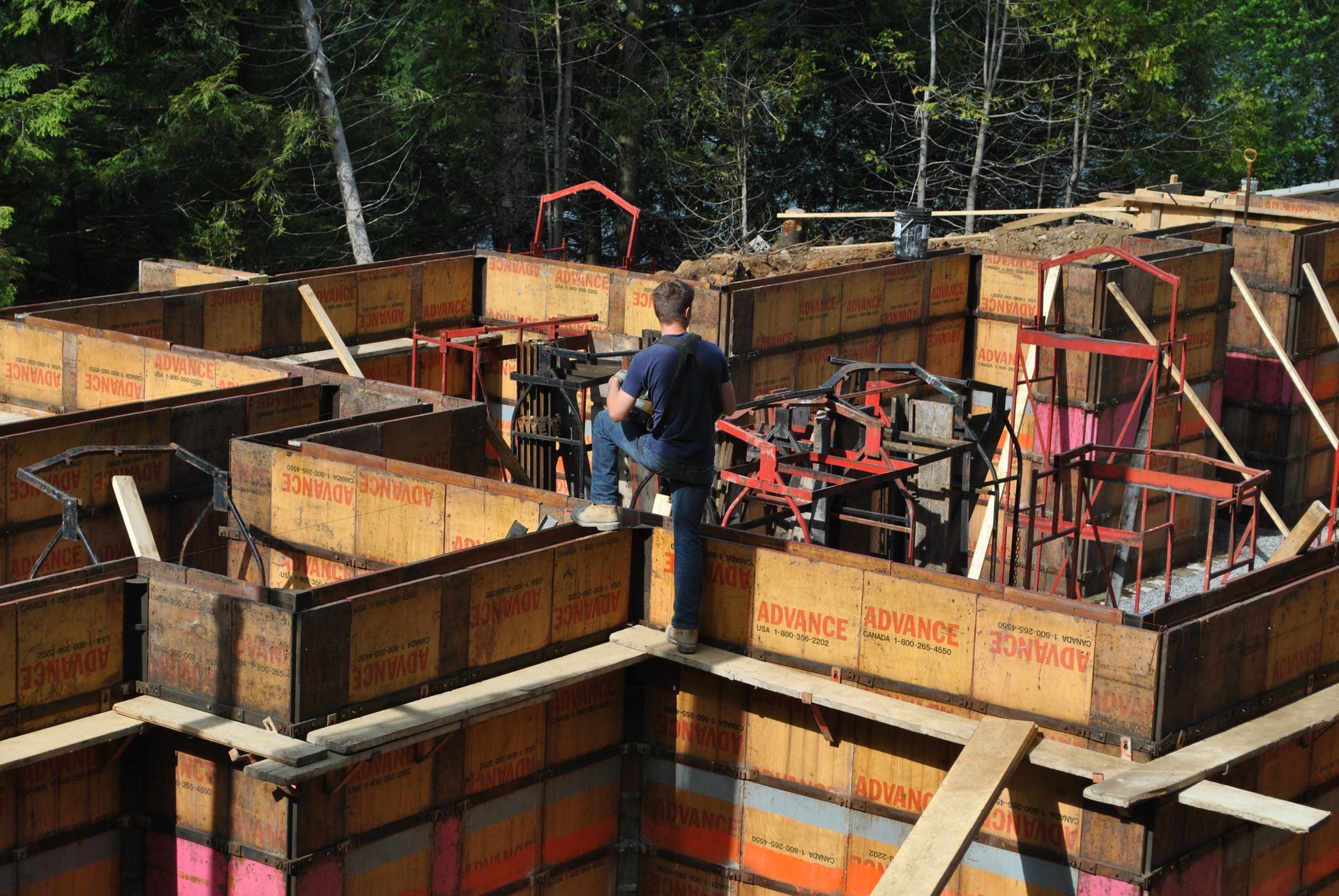
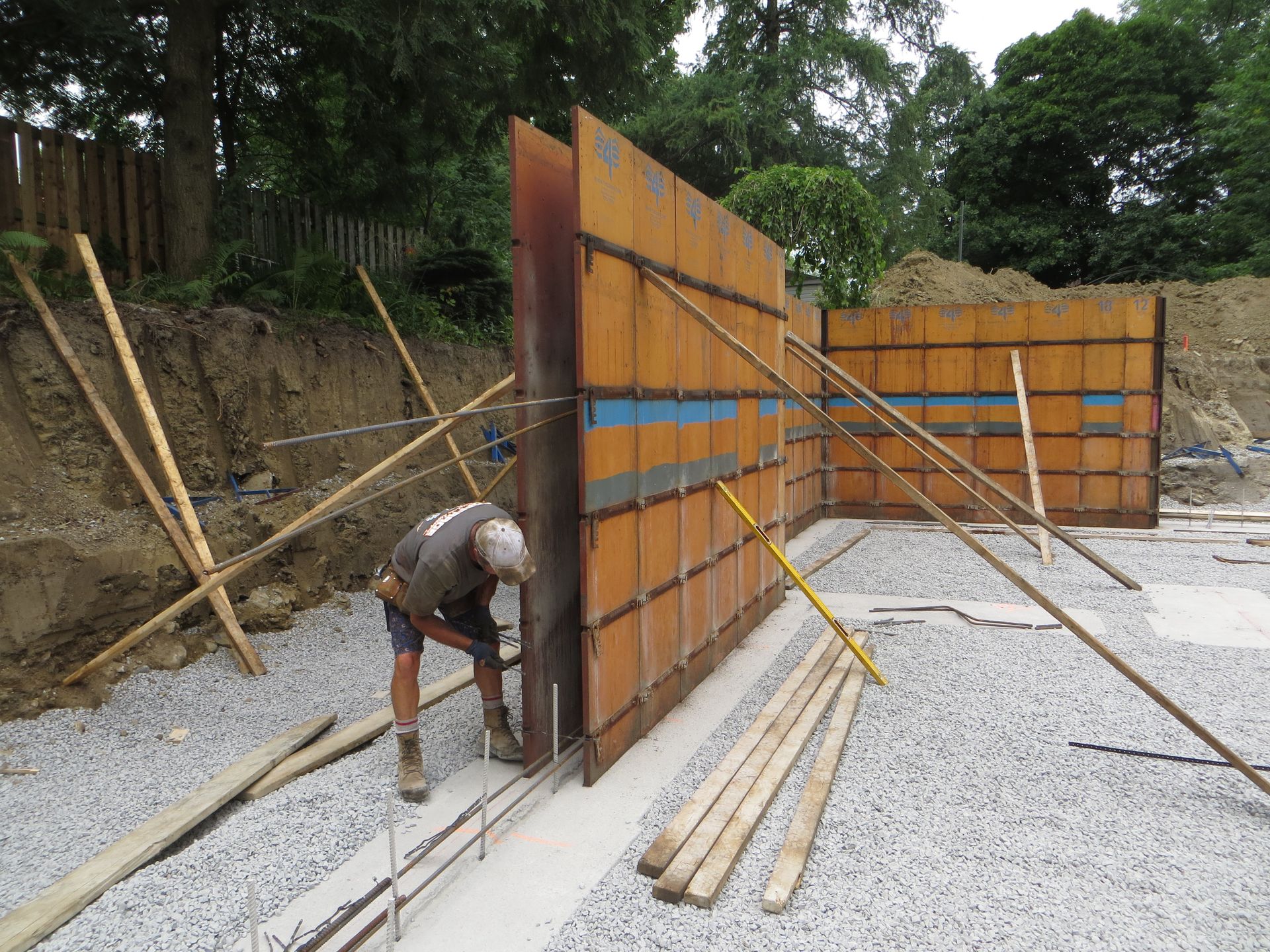
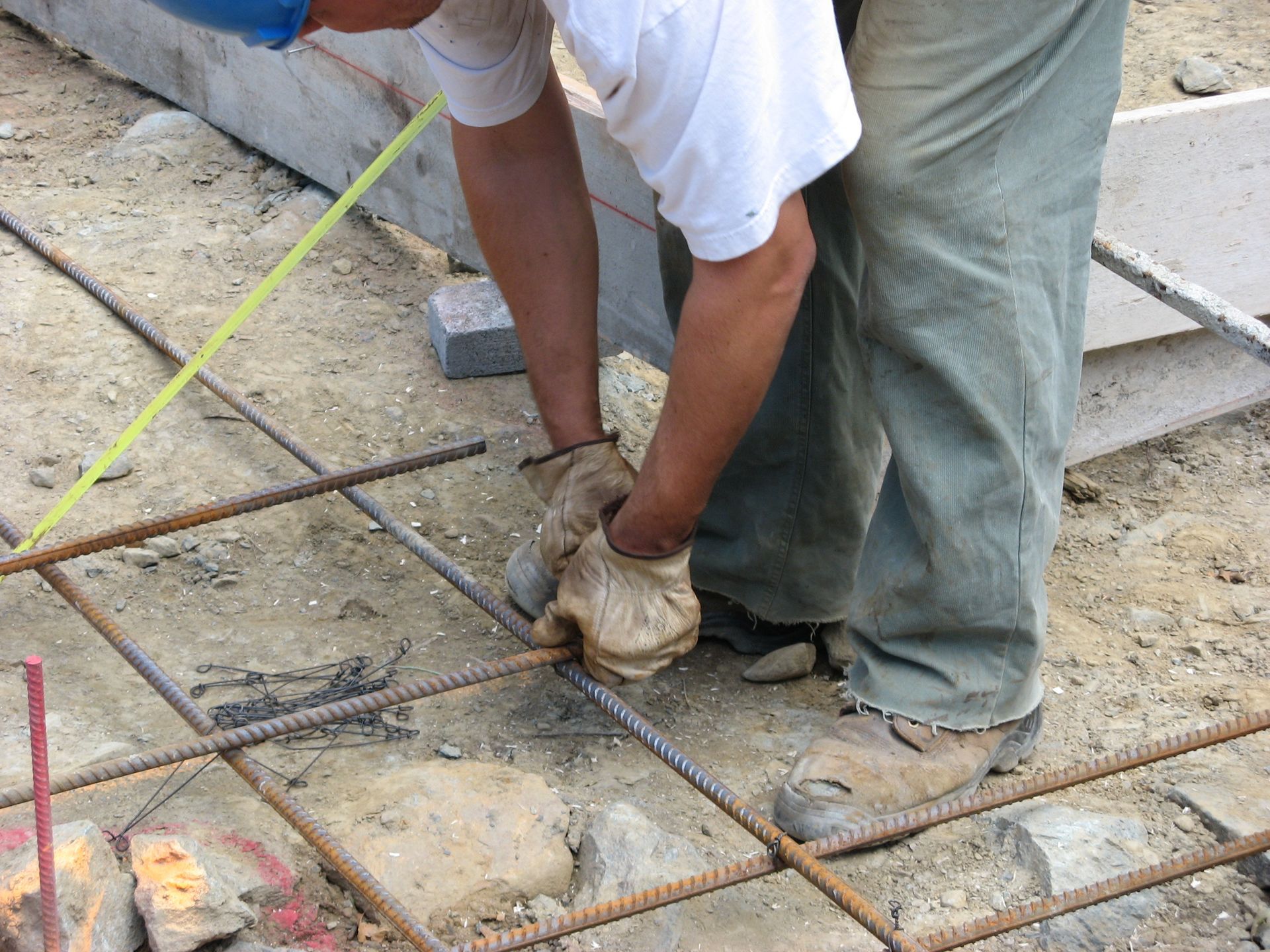
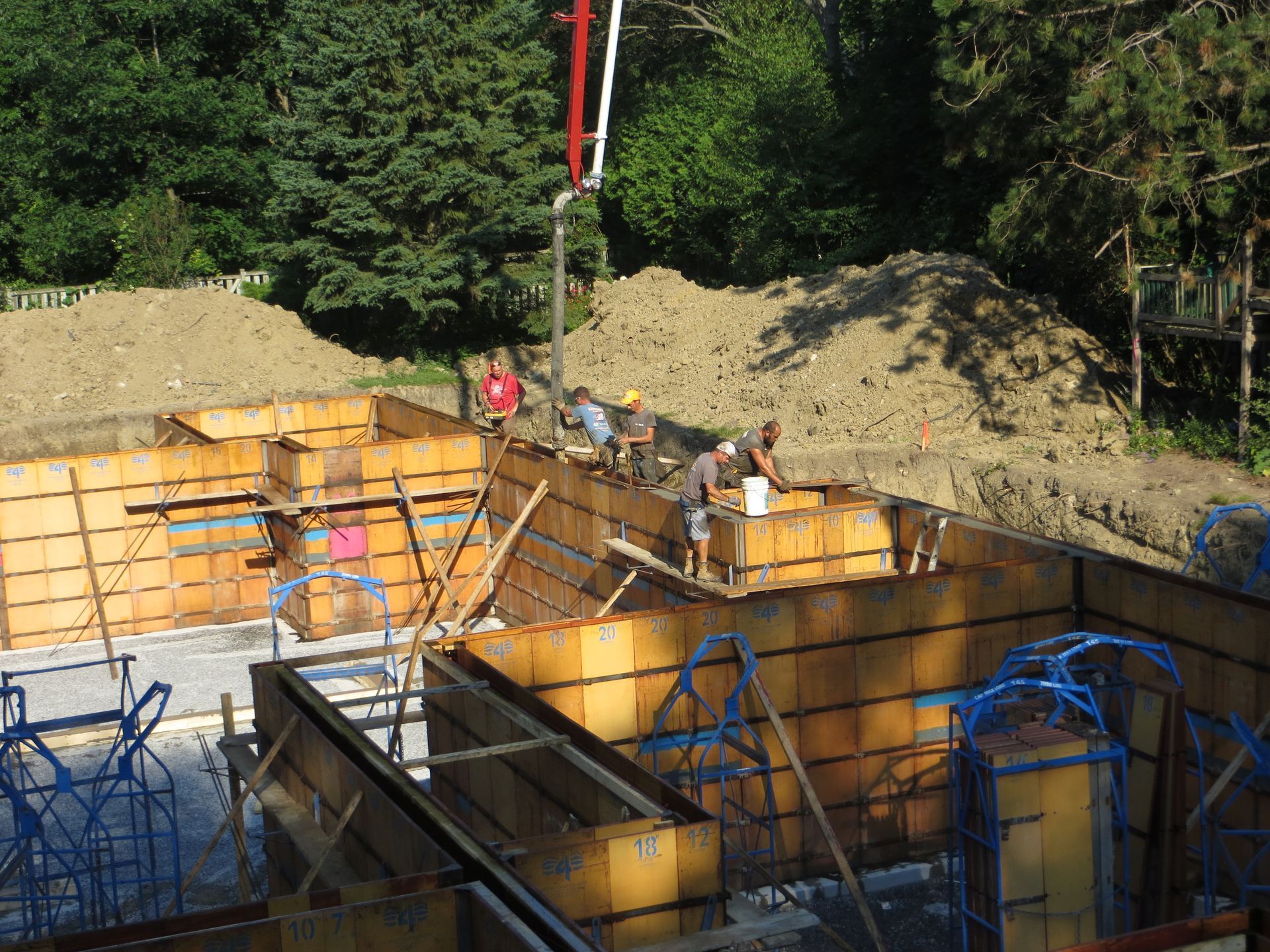
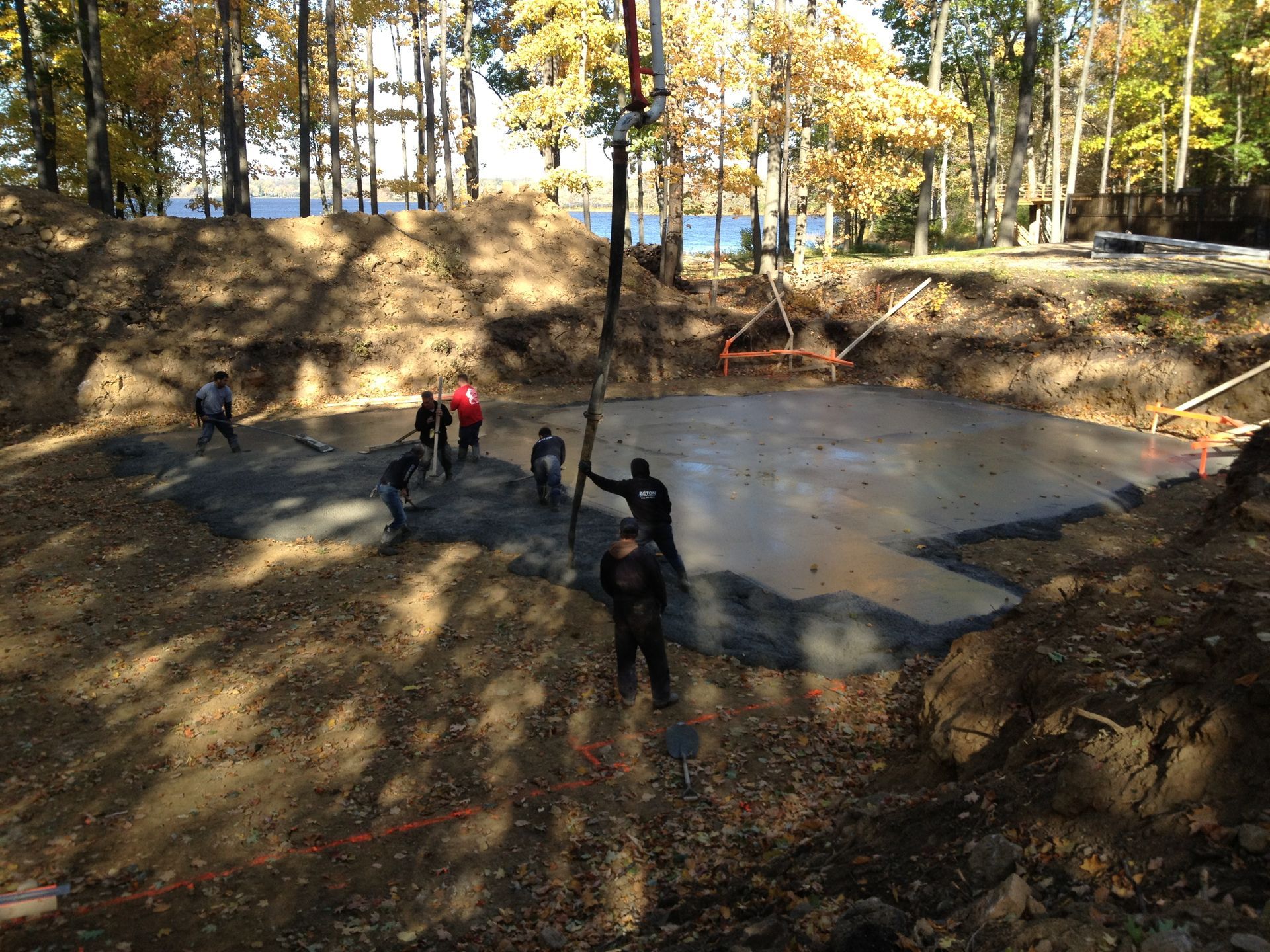
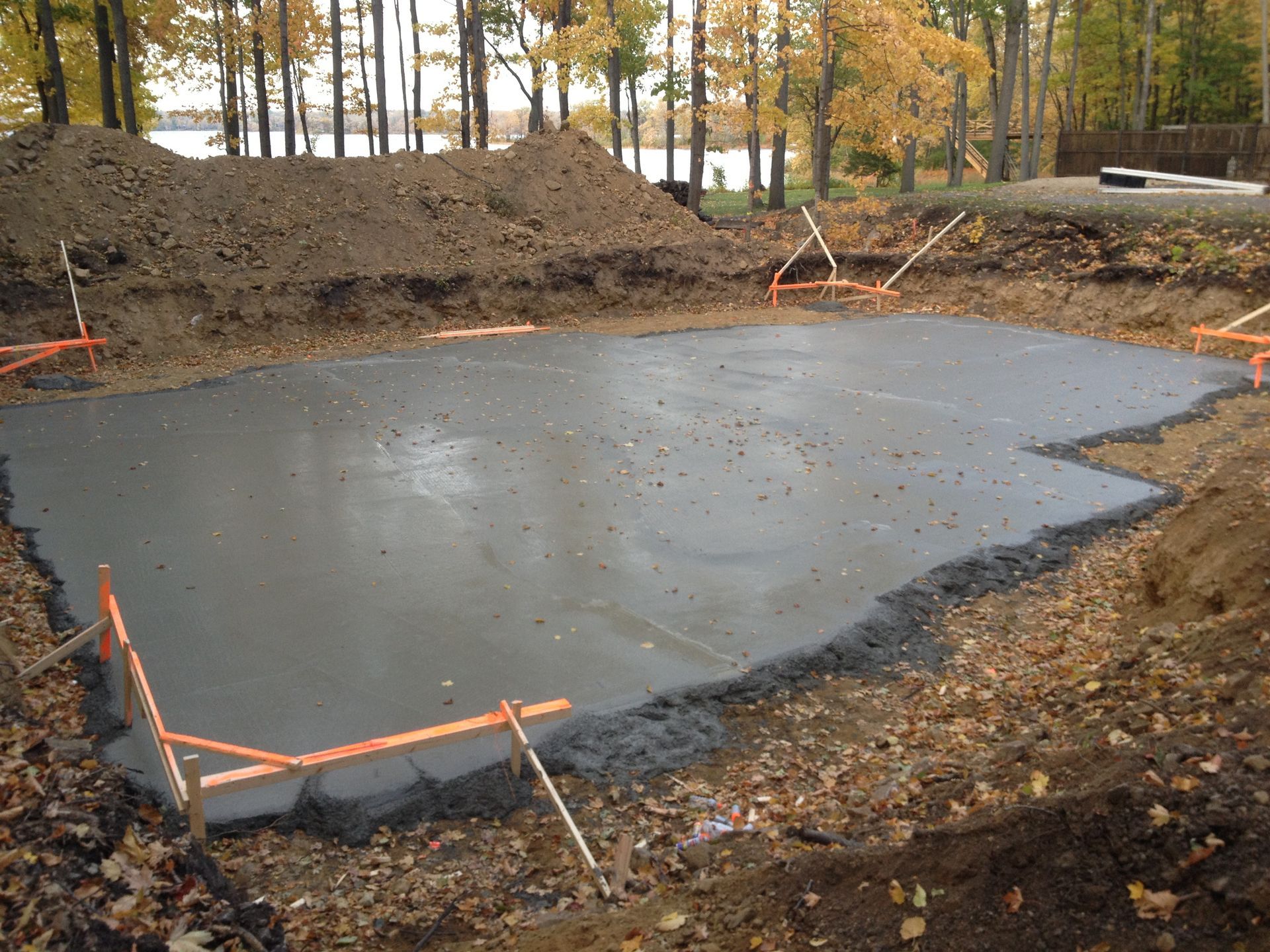
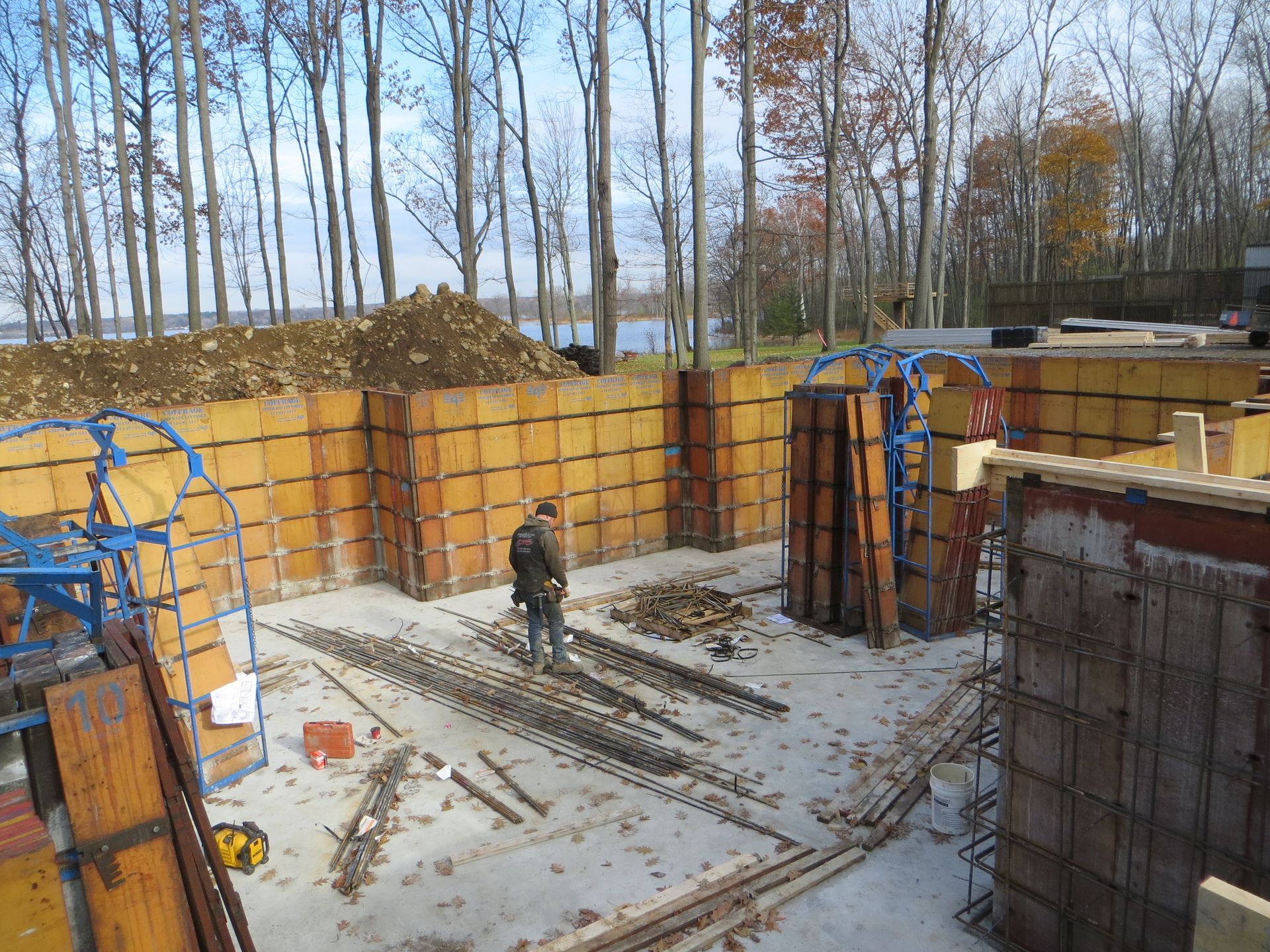
We are now typically pouring new foundation walls 12”-16” taller than was normally possible two decades ago. In order to guarantee a foundation’s rigidity, we typically use wider footings, thicker concrete walls and many types of steel reinforcement (re-bar).
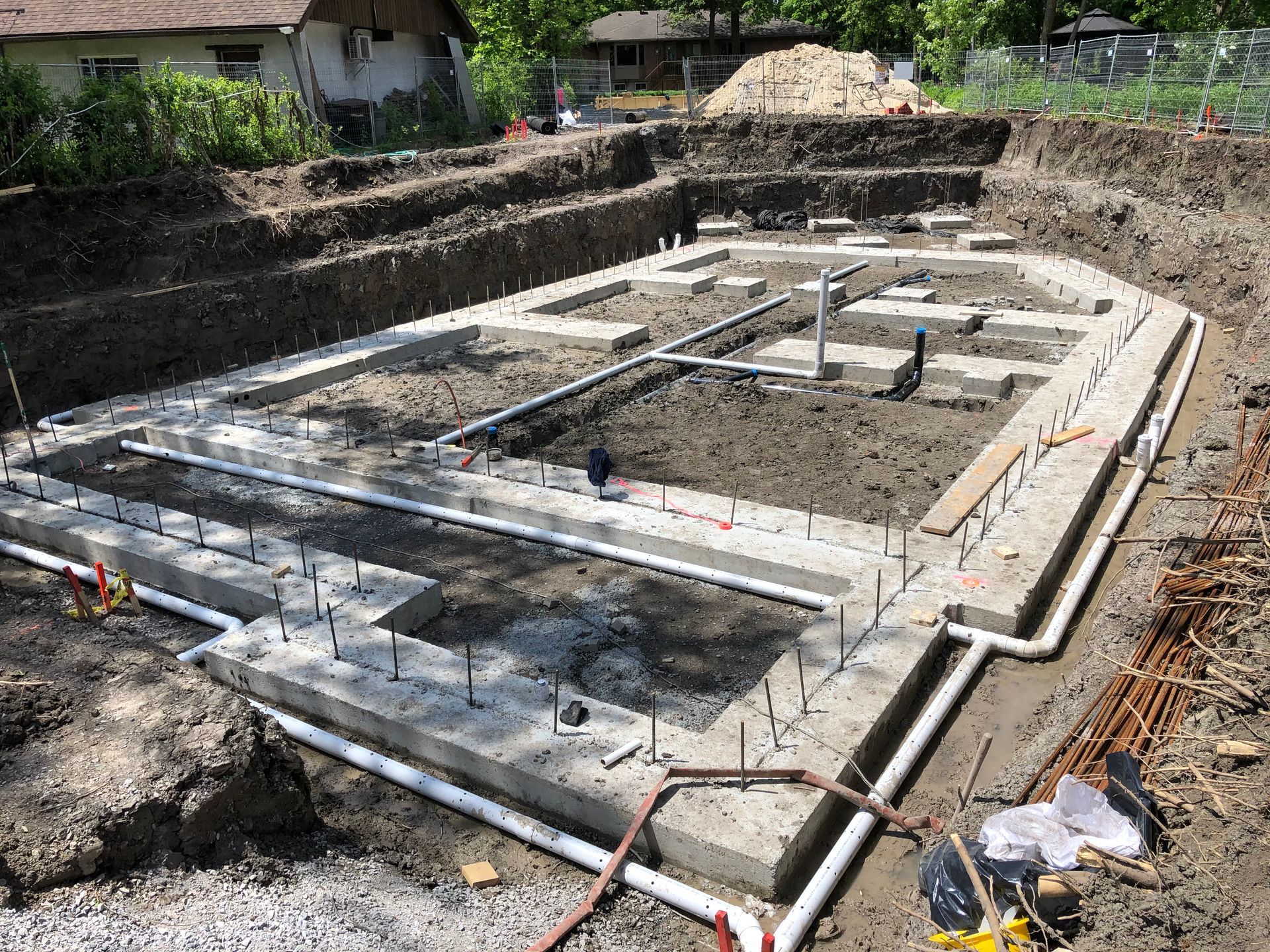
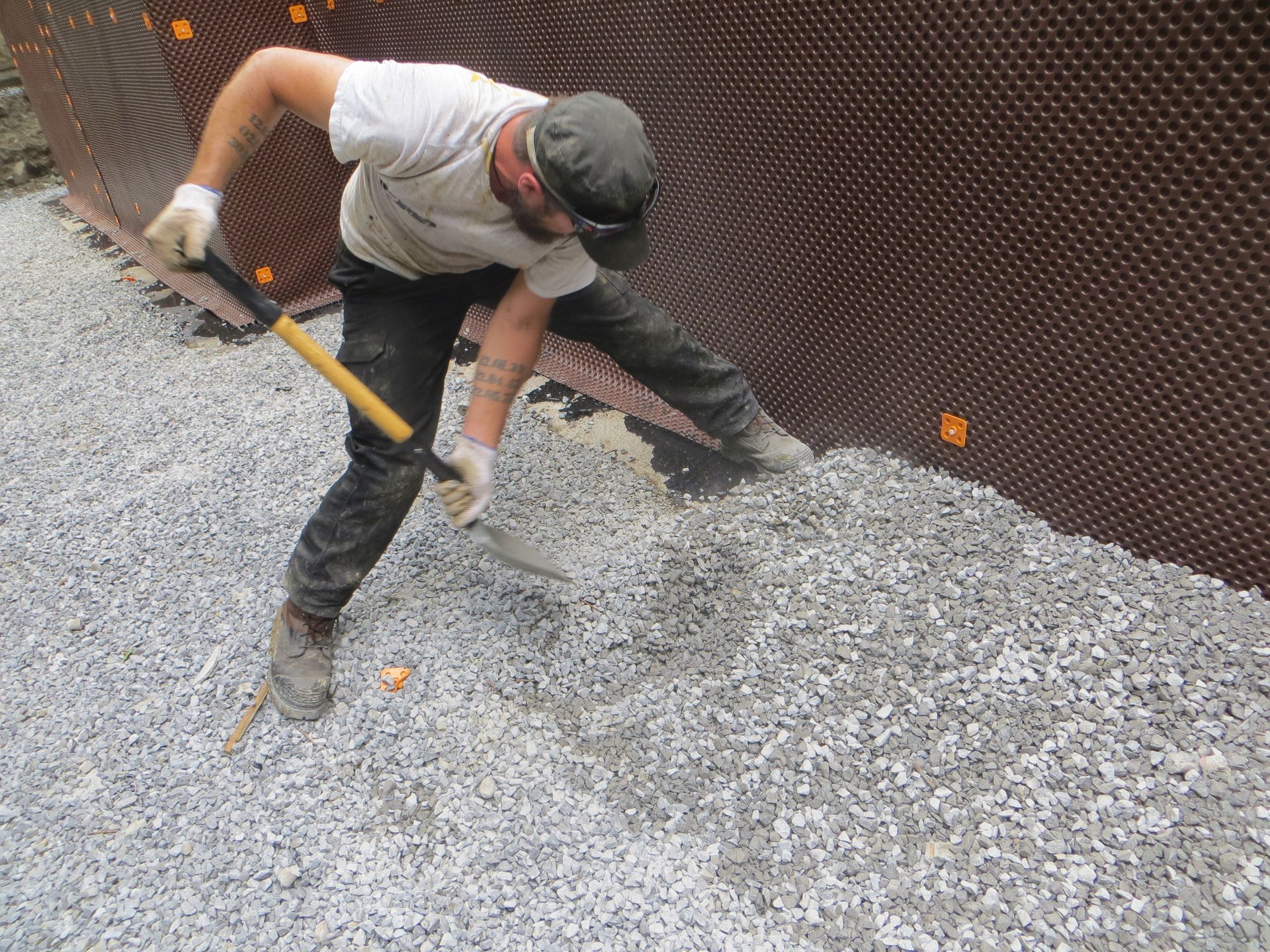
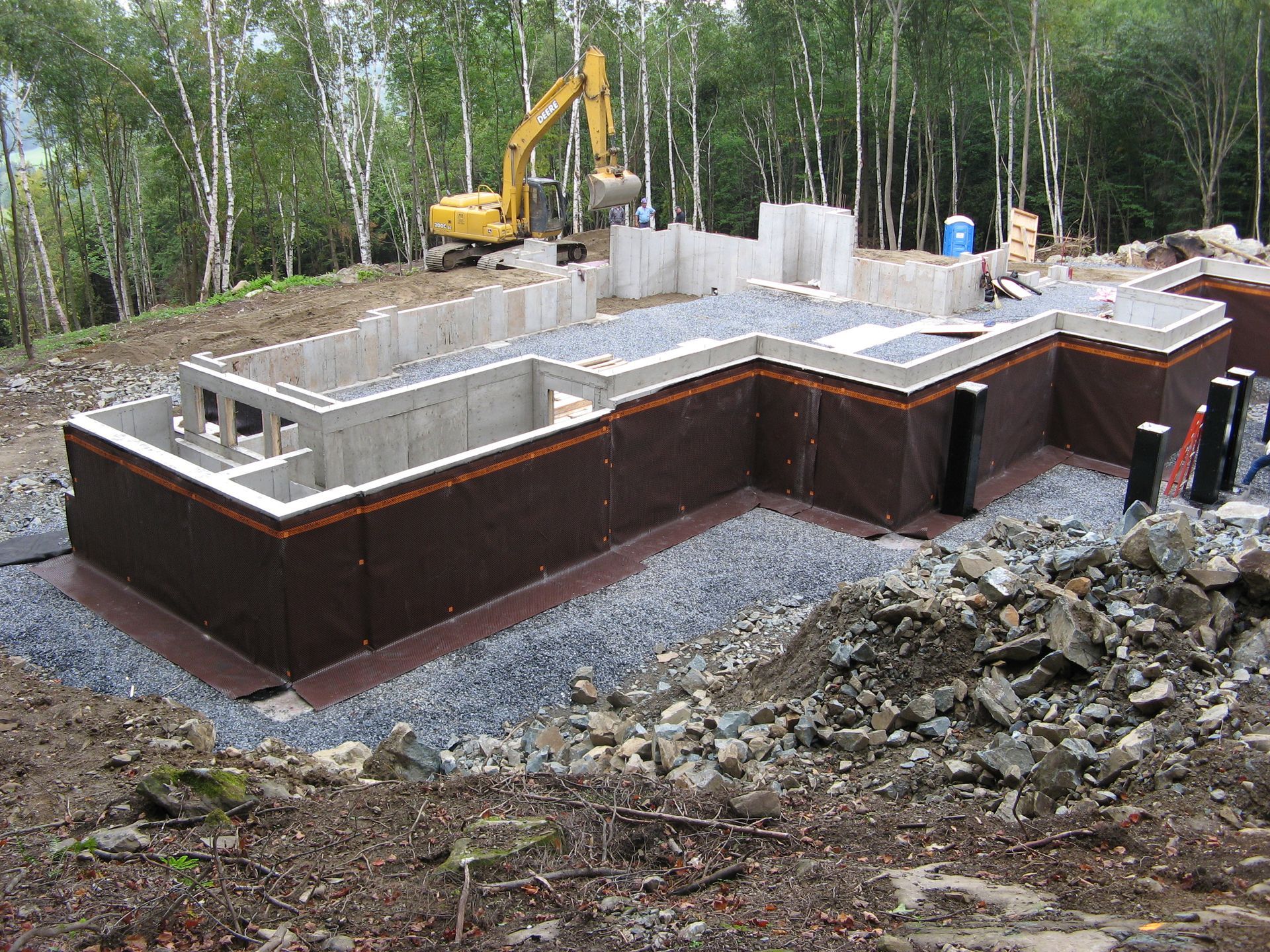
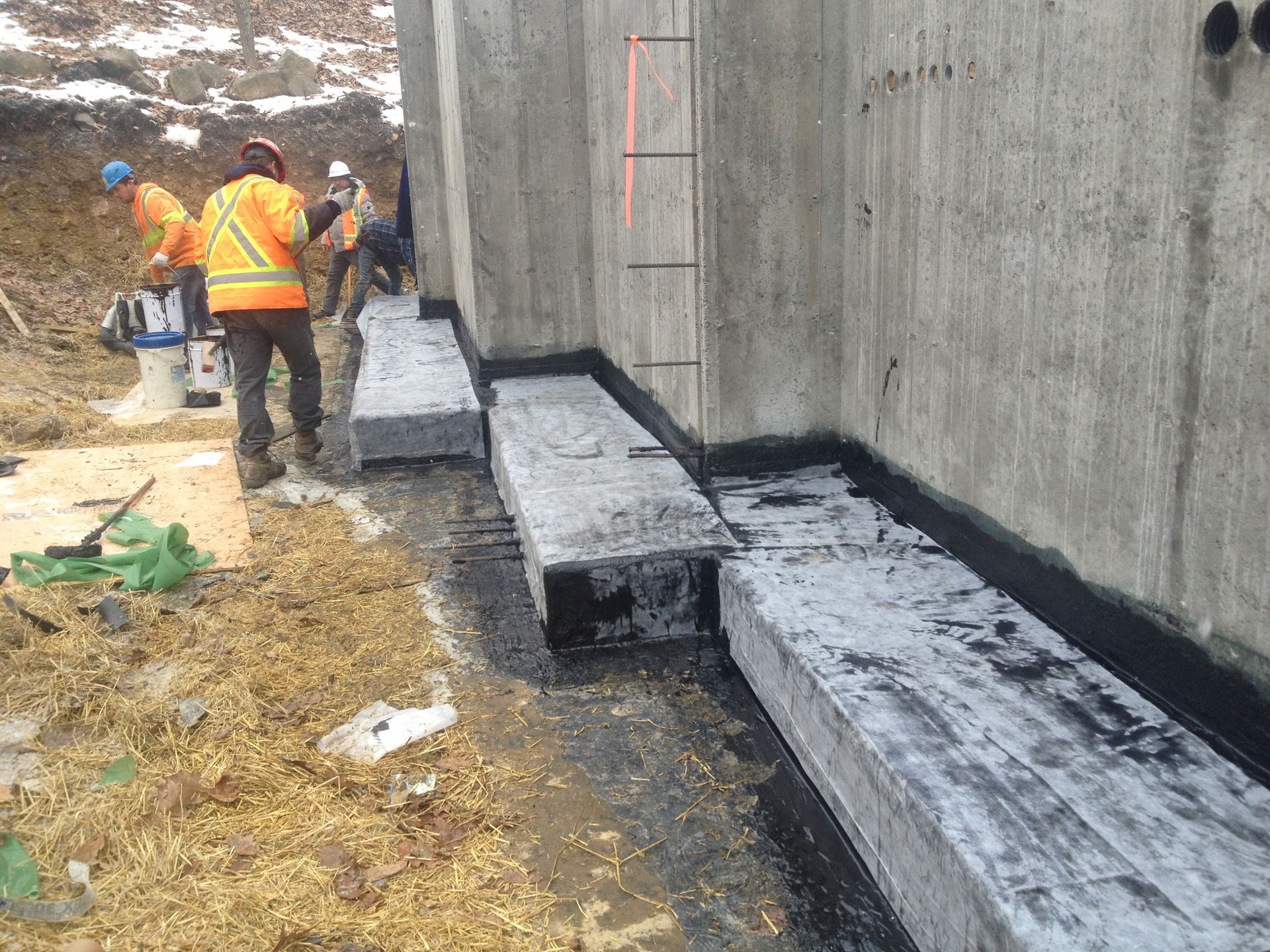
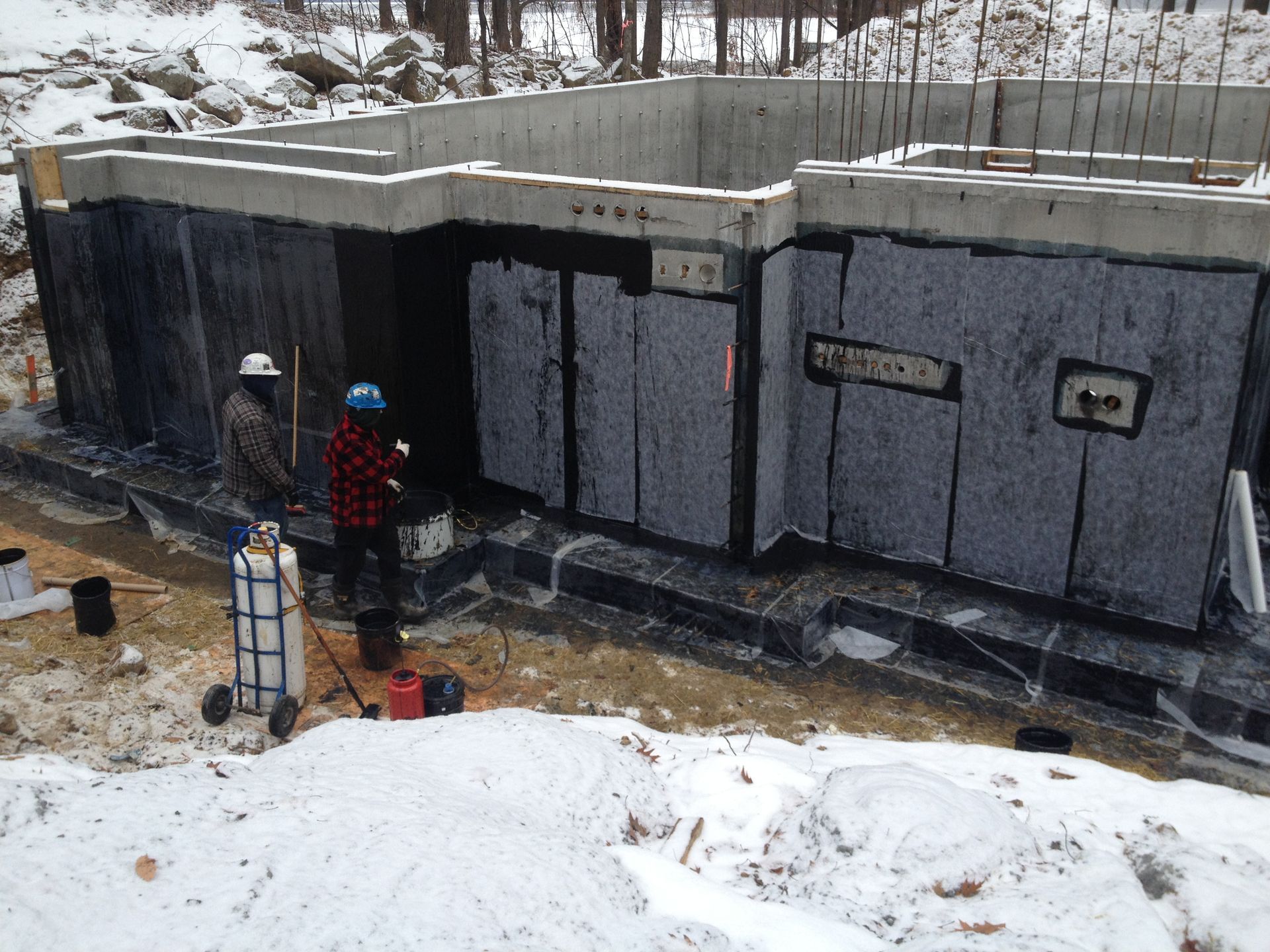
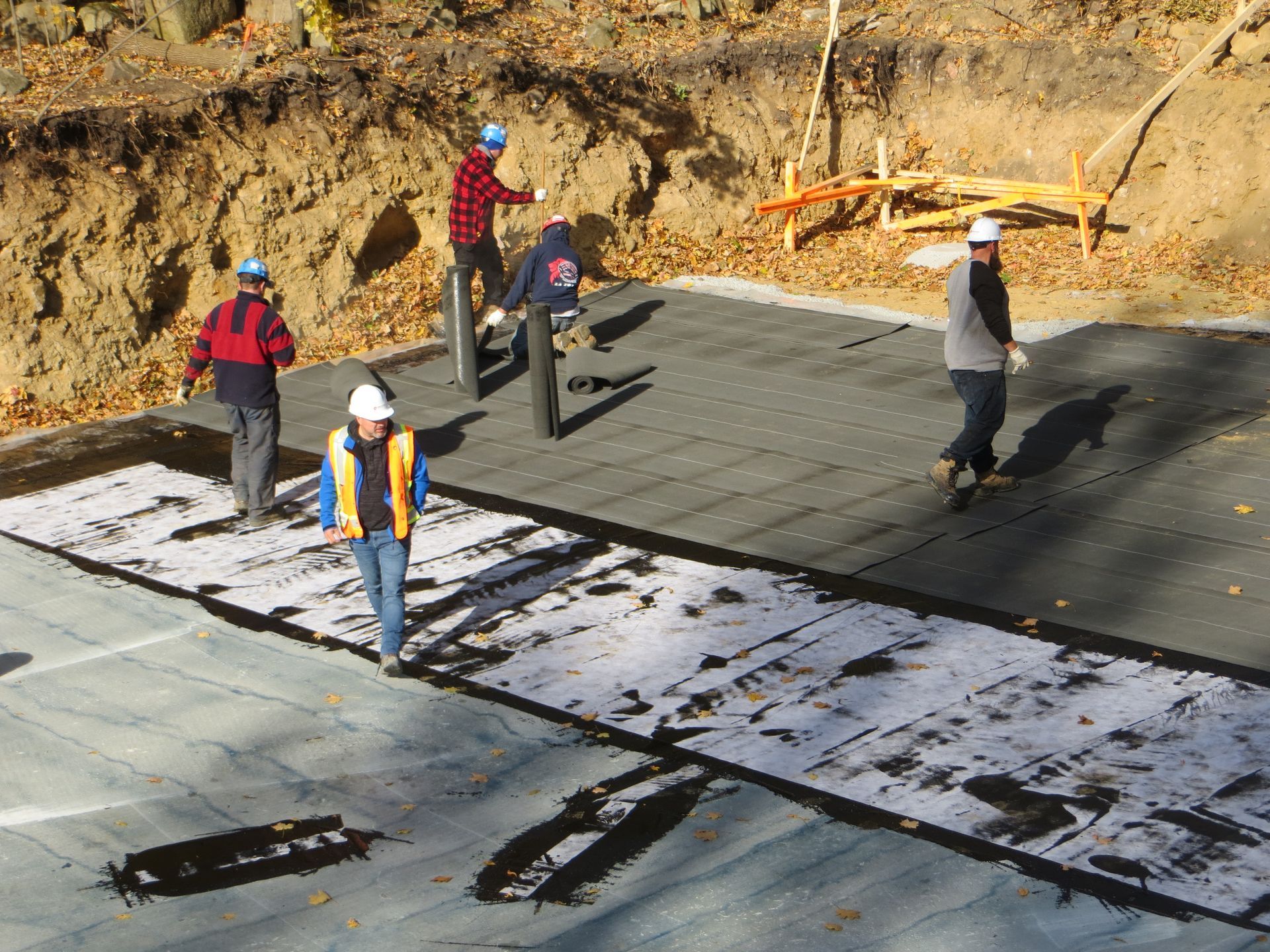
Overall, modern foundation work requires great attention to detail, before, during and after the foundation pour. There are also exterior membranes to install and backfilling protocols to follow to ensure the foundation’s critical below-grade perimeter drainage system remains effective in the long term.

Hydrofuge Foundations
If you are building on a waterfront property (and have municipal permission to build within a 20-year flood zone as identified by the province) then this is the type of foundation system which is required for your project.
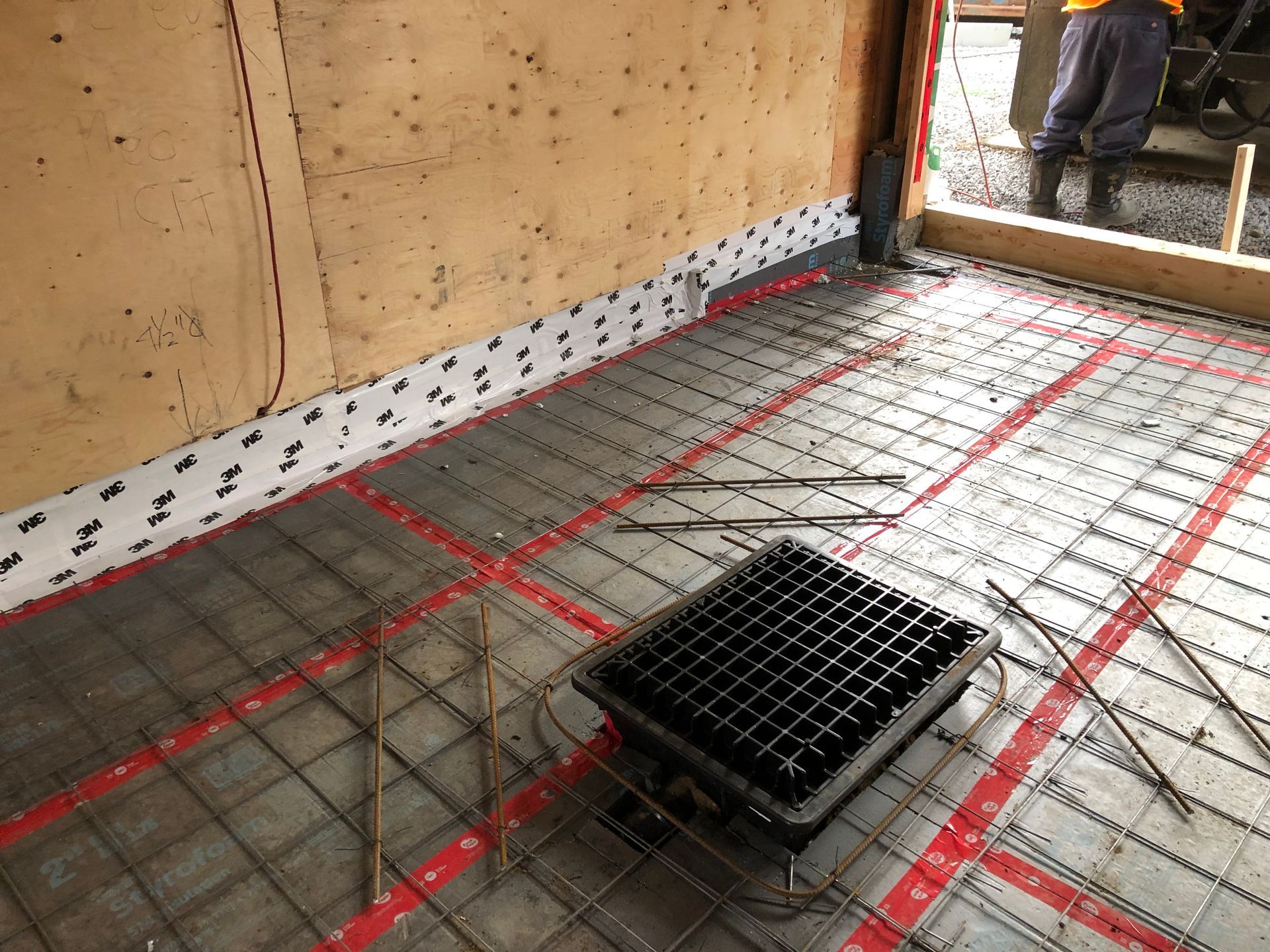
There are many constraints and changes in methodology to the scope and sequence of work to make a foundation resistant to rising water from the footings up (which typically happens during a flooding situation of a certain magnitude).
Please call us if a hydrofuge foundation system has already been discussed during the design of your new home.
Deep-Earth Structural Piling
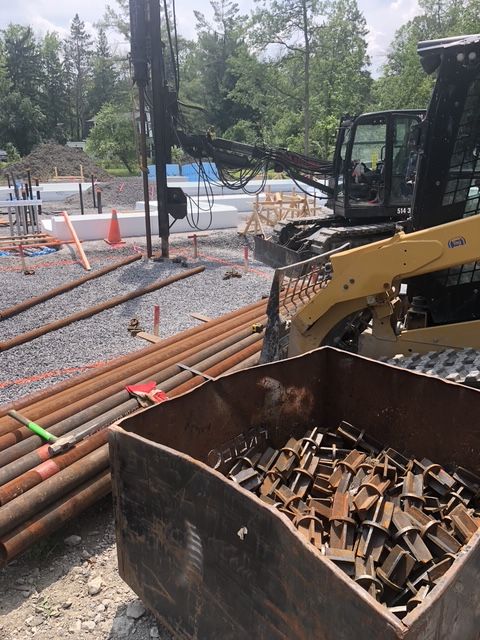
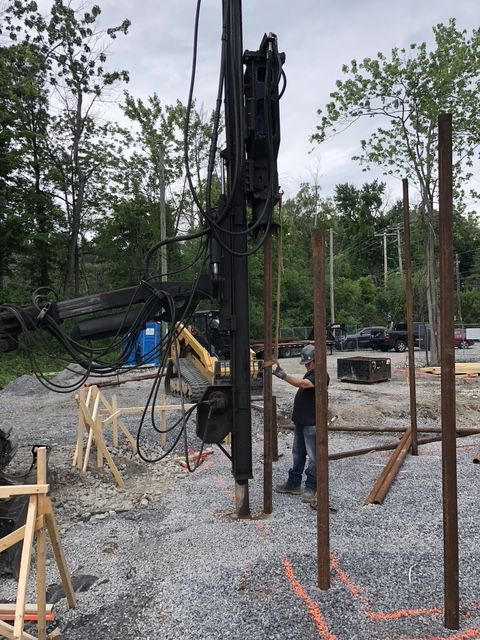
When the bearing capacity of the earth of a new house is below the limits required to place a conventional foundation system, your engineer may specify the installation of metal supporting columns (also called pilings) to support the future footings.
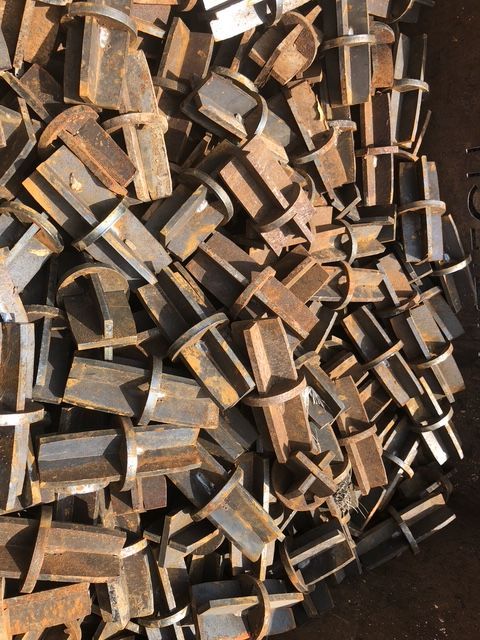
A series of metal pilings, when percussively driven well below the excavation level of the house to the level of ‘technical refusal’, will become structurally tied to the final footings of the house via caged rebar systems. After their installation and rebar connectivity, the footings of the new home may be poured in much the same manner as a normal house.